Gear Ratio Selection for Tire Size
For every 1" increase in tire diameter beyond stock, you lose roughly 3% of your effective gear ratio. Regearing is not optional once you go past 33" tires — it's a question of when, not whether. Match the ratio to your tire size from the table below, run identical gears front and rear, and pay a driveline shop to set them up unless you own the tools and have done it before.
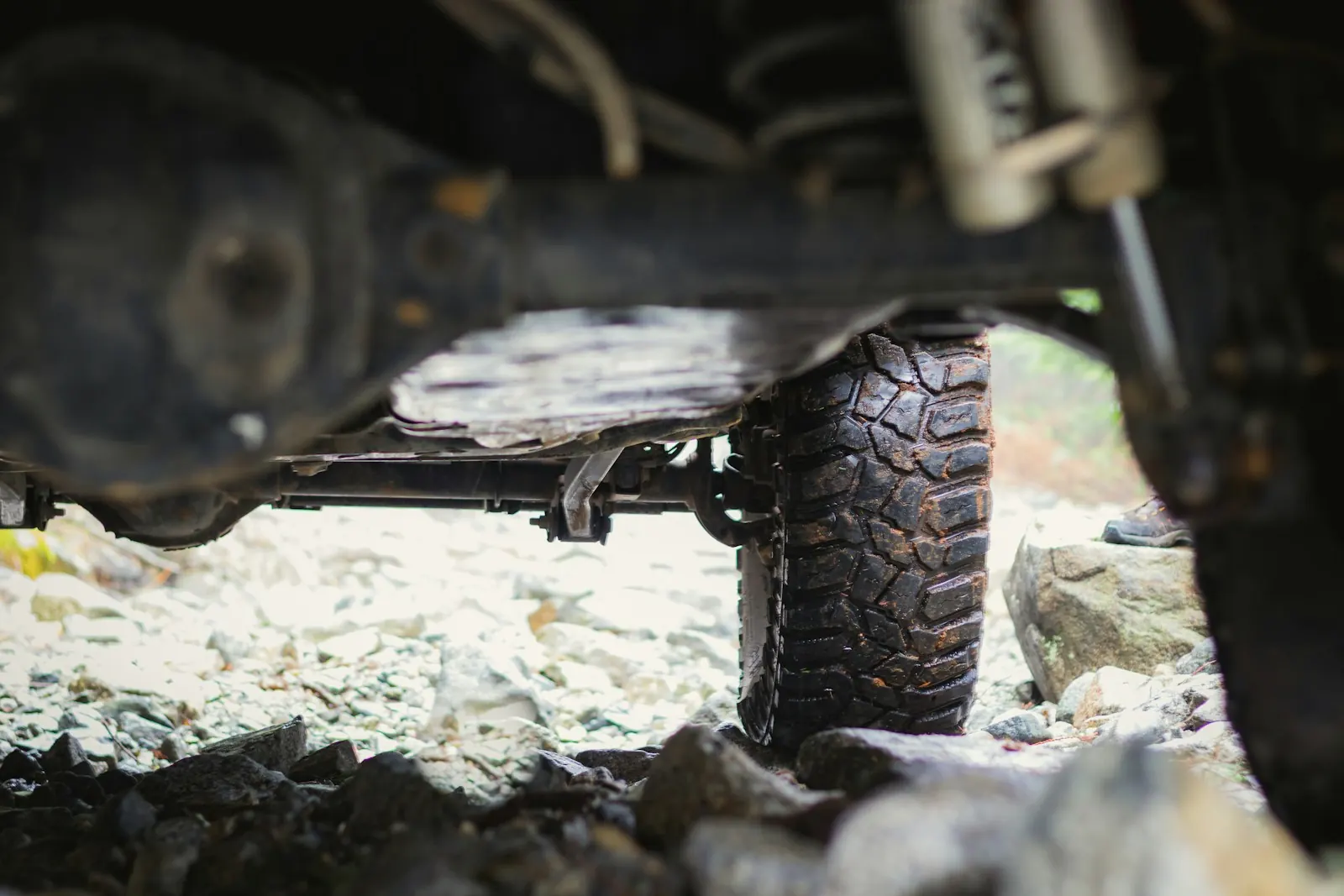
The early Bronco left the factory with 3.50 or 4.11 gears depending on year and option. Those ratios were chosen for ~30" bias-ply tires. Bolt on 33s or 35s and the engine has to work harder to turn the taller tire, low-range crawl suffers, and highway RPM drops into a lugging zone that hurts both throttle response and cooling.
This is the early Bronco starting point with the stock Dana 20 transfer case and its 2.03:1 low range:
| Tire Size | Minimum Ratio | Recommended |
|---|---|---|
| 31" | 3.73 | 3.73 or 4.09 |
| 33" | 4.09 | 4.09 or 4.56 |
| 35" | 4.56 | 4.56 or 4.88 |
| 37" | 4.88 | 4.88 or 5.13 |
Pick the recommended column if the truck spends real time on the trail or carries weight; the minimum column is for a mostly-street truck that occasionally wheels. Confirm your starting tire diameter against the tire sizing guide before you calculate — a "35" tire often measures 34.3" loaded, which changes the math.
The Dana 20's 2.03:1 low range is modest by modern standards — many newer transfer cases run 2.7:1 to 4:1. Steeper axle gearing is how the early Bronco compensates: it does the work the transfer case can't. A truck on 35s with 4.88 axle gears and the stock Dana 20 has a usable crawl ratio in the low 30s, which is workable for moderate trails. The same truck left at 3.50 gears crawls in the high teens and will smoke the clutch or stall on a ledge. If you want a deeper crawl without regearing further, the alternative is a transfer case low-range upgrade — see the Dana 20 transfer case guide.
Both axles must run identical ratios — a mismatch binds the driveline in 4WD and destroys gears or the transfer case. The Dana 44 front and rear on the early Bronco share the same 4.56, 4.88, and 5.13 options, so matching is a parts-ordering discipline, not a fitment problem. Yukon, G2, and Nitro all make complete Dana 44 sets; buy both axles' gears from the same manufacturer and the same batch where possible. Plan to install a selectable or limited-slip locker at the same time — pulling the third member apart twice doubles the labor.
Ring and pinion setup is the most precision-sensitive job on the truck. It requires a bearing press, a dial indicator, and gear marking compound, and backlash has to land within 0.006"–0.010" for a Dana 44 with the correct pinion-depth pattern. Get it wrong and the gears whine, overheat, and self-destruct inside 500 miles. Unless you own the tools and have set up a differential before, this is the job to hand to a driveline shop. Labor runs about $300–450 per axle, which is cheaper than a second set of gears after a bad home setup.
Why it works
- restores throttle response and crawl ratio with larger tires
- drastically improves low-range capability on the weak Dana 20
- pulls highway RPM out of the lugging zone, helping cooling and economy
Trade-offs
- requires matched front and rear sets — two separate jobs
- proper setup needs specialized tools and experience
- incorrect backlash or pinion depth destroys gears within 500 miles
Tools required
- ring and pinion setup tools
- inch-pound torque wrench
- dial indicator
- gear marking compound
- bearing press
Parts
| Part | Vendor | Est. price |
|---|---|---|
| Yukon 4.56 ring and pinion set (Dana 44) | Yukon Gear | ~$290 |
| Yukon 4.88 ring and pinion set (Dana 44) | Yukon Gear | ~$290 |
| Dana 44 master install kit | Yukon Gear | ~$95 |
Sources
Related
- Locker Options — Selectable, Automatic, and Limited-Slip
- Dana 20 Transfer Case — Specs, Service, and Limitations
- Tire Sizing for the Early Bronco — What Fits With What Lift
- All Ford Bronco guides & tools
- Browse the full DIY database
Written and maintained by an AZ wheeler and driveway wrencher. How we source guides. Always cross-reference your factory service manual — modifications affect vehicle safety and warranty. Work at your own risk.