Dana 20 Transfer Case — Specs, Service, and Limitations
The Dana 20 is a robust, gear-driven transfer case with a 2.03:1 low range — adequate for mild trail use, marginal for serious rock crawling. Service it every 30,000 miles and watch the output shaft seals.
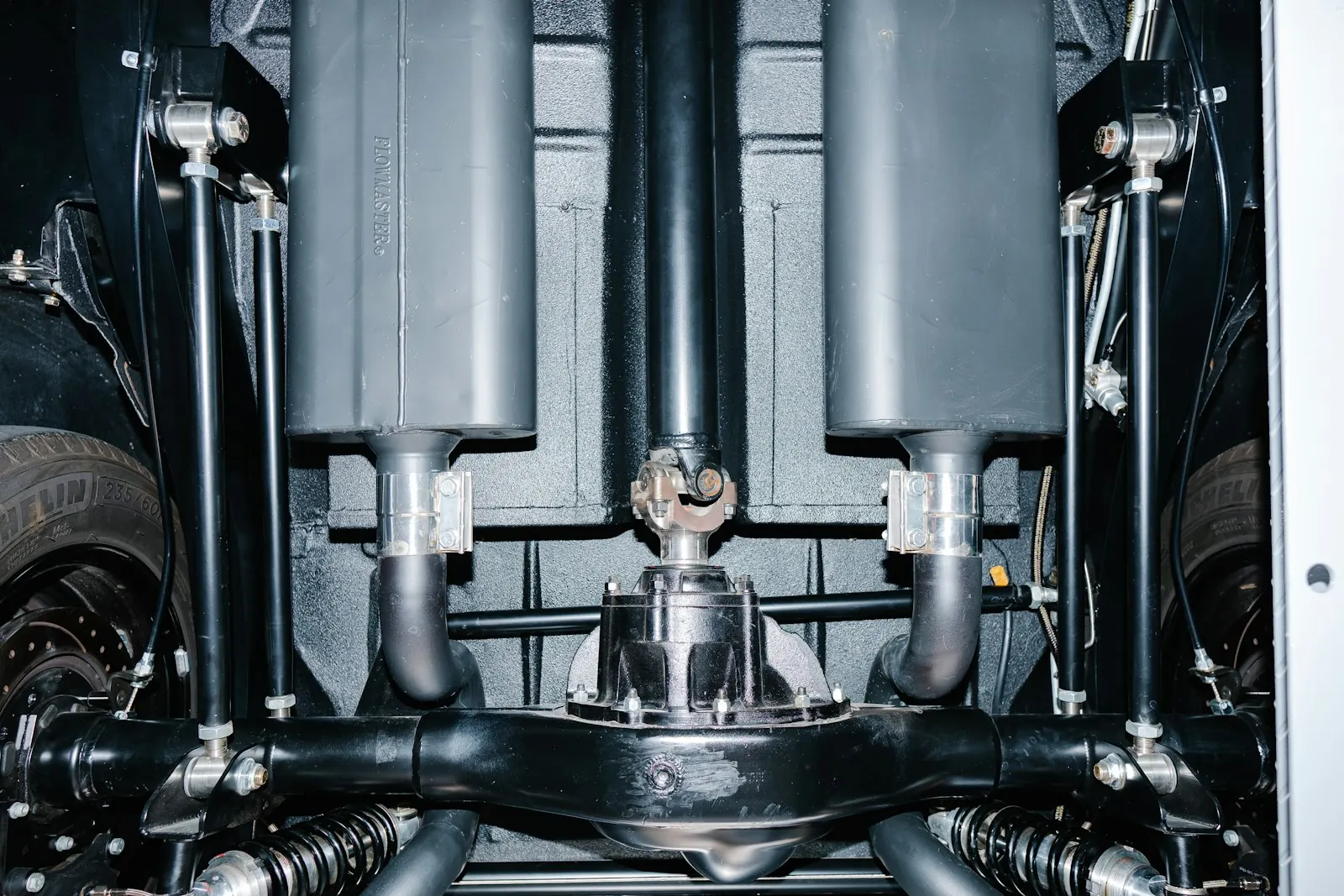
All 1966–1977 Broncos used the Dana 20 part-time transfer case. It's a chain-free, gear-driven unit — extremely reliable and direct to service. This page is the reference for what it is, how it's geared, how to keep it alive, and where its limits are.
Key numbers for the early Bronco Dana 20:
- Low range ratio: 2.03:1
- High range: 1:1 (direct)
- Shift: floor-mounted twin levers (2H / 4H / 4L)
- Input: from the transmission output
- Front output: to the front driveshaft
- Rear output: long shaft with a sliding slip yoke (relevant once you lift — see below)
Crawl ratio is the number that matters off-road. With a 3-speed manual (3.07:1 first gear), the 2.03:1 low range, and a 4.09:1 axle ratio: 3.07 × 2.03 × 4.09 = 25.5:1. That's acceptable for mild trails and forest roads, but inadequate for technical rock crawling without steeper axle gearing. If you're chasing a deeper crawl ratio, the lever to pull is axle ratio — see Gear Ratio Selection, because the Dana 20's 2.03 low range is fixed and the transmission first gear is what it is.
The Dana 20 asks for very little, but ignore it and the cheap failures turn expensive:
- Drain and refill gear oil every 30,000 miles. Use 80W-90 GL-5 gear oil. Capacity is roughly 1.5 pints — fill to the bottom of the fill plug hole.
- Inspect the output shaft seals annually. A leaking rear seal soaks the driveshaft yoke and eventually destroys the driveshaft U-joint. An $18 seal prevents a $250 U-joint and a roadside failure.
- Inspect the front output yoke for elongation — the retaining nut backs off over time on high-mileage units, and a loose yoke chews the splines.
- After any water crossing deep enough to submerge the case, check the oil for milky contamination and change it if water got past the seals.
If the Dana 20 won't shift into 4L or pops out of low range under load, the most common cause is a worn detent ball and spring in the shift rail. A rebuild kit ($180) includes these along with all bearings, seals, and gaskets, and the unit comes apart on a bench with hand tools — there's no chain or pump to fight. While it's open, replace the rear output seal while you are in there rather than chasing a leak later.
Two real-world notes for a built Bronco:
The factory rear output uses a long shaft and slip yoke. Once you lift the truck about 4 inches or more, the rear driveshaft angle gets steep and the slip yoke is exposed to trail damage. The fix is a slip yoke eliminator with a CV-style driveshaft — covered in Slip Yoke Eliminator and CV Driveshaft. For milder lifts, a revised stock-style driveshaft with fresh U-joints is often enough.
Some builders swap to a Dana 300 (1980–1986 CJ) for a deeper 2.62:1 low range. This is a custom fabrication project — the adapter, bolt pattern, and dimensions differ from the Dana 20. It's not a common early Bronco modification, and most owners get where they need to go by regearing the axles instead.
Why it works
- gear-driven (no chain to stretch or replace)
- direct, proven design that rebuilds on a bench with hand tools
- cheap parts and excellent reliability
Trade-offs
- 2.03:1 low range is modest versus modern transfer cases
- limited crawl ratio without steep axle gearing
- twin-lever shift can be notchy when cold
- exposed long rear output and slip yoke once the truck is lifted
Tools required
- drain pan
- socket set
- torque wrench
- gasket scraper
Parts
| Part | Vendor | Est. price |
|---|---|---|
| Dana 20 rebuild kit (bearings, seals, gaskets) | Spicer / Various | ~$180 |
| Dana 20 output shaft seal (rear) | National Seals | ~$18 |
| Gear oil 80W-90 (1 quart) | Pennzoil / Mobil 1 | ~$12 |
Sources
Related
- Slip Yoke Eliminator and CV Driveshaft — Lifted-Rig Vibration Fix
- Driveshaft and U-Joint Upgrades for a Lifted Early Bronco
- Gear Ratio Selection for Tire Size
- All Ford Bronco guides & tools
- Browse the full DIY database
Written and maintained by an AZ wheeler and driveway wrencher. How we source guides. Always cross-reference your factory service manual — modifications affect vehicle safety and warranty. Work at your own risk.