Re-Gearing the JK — 4.56, 4.88, and 5.13 Ratios
Re-gearing restores the JK's effective drive ratio after a tire size increase — it's not optional once you go beyond 33s, and the correct target ratio is determined by tire size and how the rig will be driven.
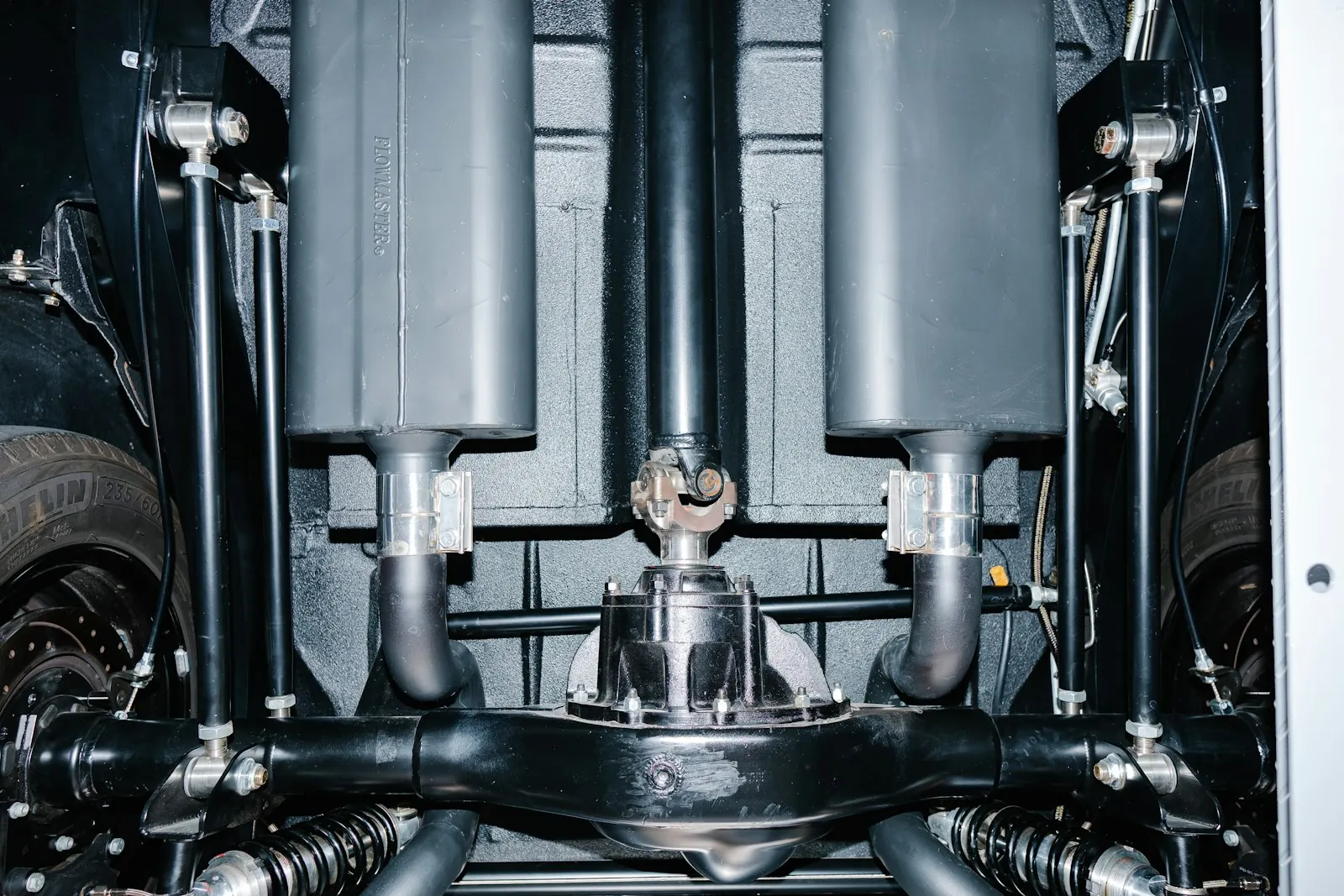
Stock JK Sport and Sahara models leave the factory with 3.73 axle gearing, which is calibrated for the factory 255/75R17 tires (31.1" diameter). When you increase tire diameter, the effective gear ratio drops because each tire rotation covers more ground. Running 35" tires on 3.73 gears is equivalent to dropping your final drive ratio by roughly 0.40 — the engine lugs on highway grades, the transmission runs hotter, throttle response is dull, and the crawl ratio in low range is compromised. The fix is a regear: new ring and pinion sets in both front and rear axles that restore the effective ratio to near-stock or improve on it. Both axles must match — mismatched ratios between front and rear axles will damage the transfer case.
The ratio targets are established by tire size: 4.56 gearing is correct for 35" tires (common on mild-trail and overland builds), 4.88 is the standard for 37s and represents the best balance of highway performance and trail crawl ratio, and 5.13 is for heavily built 37" rigs in serious rock terrain where maximum mechanical advantage is the priority. Running 4.88 gears on 37s on a JK with the factory 2.72:1 transfer case low range gives you an effective crawl ratio of approximately 73:1 — enough to navigate most technical terrain at a controlled idle. The Rubicon's NP241J case has a 4:1 low range, which pushes crawl ratio to over 100:1 at 4.88 gearing. Non-Rubicon owners can get the Rubicon's crawl ratio benefit from an aftermarket 4:1 low range kit, but that's a separate project.
The parts cost for a regear is only part of the total bill. Yukon's ring and pinion sets for the Chrysler 8.25" and Dana 30 are $189–$199 each, but a complete master install kit adds another $150–$200 per axle (carrier bearings, pinion bearings, pinion seal, crush sleeve or solid collar, and shims). Labor at a shop adds $300–$600 per axle depending on market. Total cost for both axles including parts and professional installation typically runs $1,200–$2,400. If you're experienced with differential setups, the DIY savings are real — but ring and pinion pattern setup is the highest-skill task in most DIY builds. An improperly set gear pattern that sounds fine initially will fail within 10,000–15,000 miles.
One critical timing point: pair the regear with a rear locker installation if you haven't already done one. The differential is already apart, the carrier is already out, and you're paying for differential labor once. Installing the locker at the same time as the regear saves a full shop visit and $200–$400 in labor overlap.
Steps
- Drain both axles of gear oil before starting.
- Remove the driveshafts, brake rotors, and axle shafts to access the differential assembly.
- Mark and remove bearing caps; pull the carrier assembly from the housing.
- Use a dial indicator to record existing backlash and bearing pre-load before disassembly (reference for new setup).
- Remove the old ring gear from the carrier and the pinion from the housing.
- Press on the new carrier bearings; bolt the new ring gear to the carrier with new bolts (ring gear bolts are not reusable).
- Set pinion depth using the manufacturer's shim data — this is the most critical measurement in the entire process.
- Set bearing pre-load on the pinion using a new crush sleeve or a solid collar with shims.
- Install the carrier assembly and set backlash to the manufacturer's specification (typically 0.006"–0.010").
- Check the gear contact pattern with marking compound; adjust shims as needed until the pattern is centered.
- Torque all bearing caps and hardware to factory spec.
- Reinstall axle shafts, seals, rotors, and driveshaft.
- Fill with the correct gear oil — 80W-90 for most applications, 75W-140 synthetic if a limited slip additive is not required.
- Repeat for the second axle before returning to service.
Why it works
- Restores highway performance and fuel economy lost when upgrading tire size
- Correct regear dramatically improves low-range crawl ratio — often more impactful than a locker on sustained technical terrain
- Both axles geared at 4.88 with the factory NP241OR gives a 73:1 crawl ratio — adequate for most trail JKs
- Can be combined with rear locker installation to save labor cost
Trade-offs
- Highest-skill DIY task on the JK — incorrect gear pattern setup causes premature failure
- Must do both axles simultaneously — mismatched ratios destroy the transfer case
- Total installed cost ($1,200–$2,400) surprises buyers who only price the ring and pinion sets
- 5.13 gearing is rough at highway speed for daily-driven rigs — only appropriate for dedicated trail builds
Tools required
- floor jack
- jack stands
- torque wrench
- socket set
- dial indicator
- bearing puller
- crush sleeve eliminator or new crush sleeve
- inch-pound torque wrench
- differential setup tools
- RTV sealant
Parts
| Part | Vendor | Est. price |
|---|---|---|
| Yukon Gear 4.88 Ring & Pinion Set for Chrysler 8.25" | Yukon Gear | ~$199 |
| Yukon Gear 4.88 Ring & Pinion Set for Dana 30 | Yukon Gear | ~$189 |
| Rugged Ridge 4.56 Master Ring & Pinion Install Kit with Bearings (Dana 30) | Rugged Ridge | ~$349 |
Sources
Related
- Rear Locker Options — Chrysler 8.25" and Dana 44
- Front Locker Options — Dana 30 and Dana 44
- Running 37" Tires on the JK — Lift Requirements and Fitment Notes
- All Jeep Wrangler JK guides & tools
- Browse the full DIY database
Written and maintained by an AZ wheeler and driveway wrencher. How we source guides. Always cross-reference your factory service manual — modifications affect vehicle safety and warranty. Work at your own risk.