Electric Sway Bar Disconnect — Troubleshooting
Most JK Rubicon sway bar disconnect failures trace to water in the harness connector and grease washed out of the actuator gearbox. Clean it, re-grease it, and seal the connector before you spend $320 on a new motor — that repair fixes the majority of e-disco complaints for the cost of an afternoon and a tube of grease.
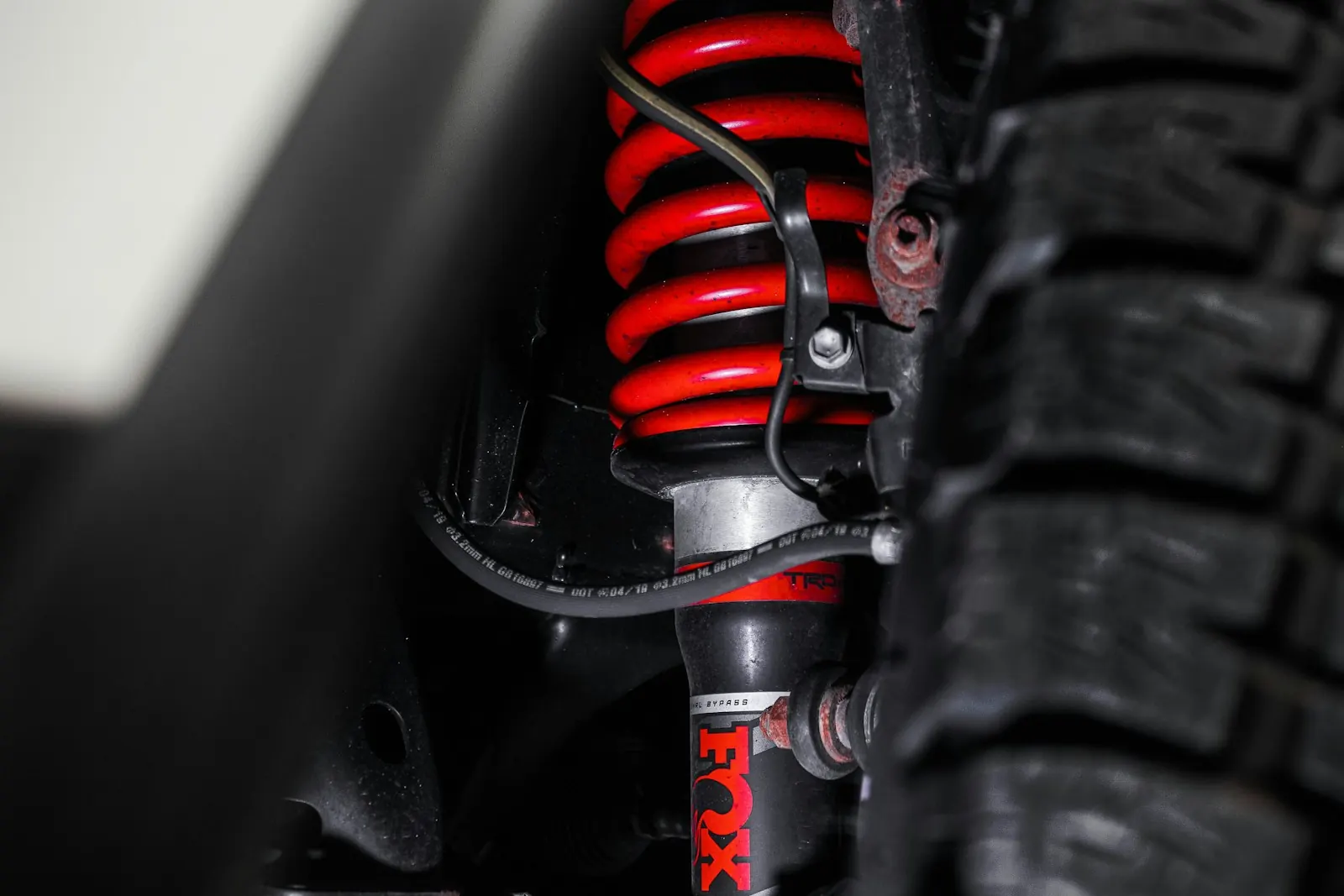
The American Axle SmartBar that came standard on every JK Rubicon is genuinely clever hardware in a genuinely poor location. An electric actuator drives a shift fork across a set of splines to lock or release the two halves of the front sway bar. The mechanical side is robust and rarely the problem. The electrical side — a CAN-bus-connected actuator mounted under the front axle, directly in the path of every water crossing and mud spray the Jeep has ever seen — is where it comes apart.
The dash indicator is the primary diagnostic tool and its behavior is specific:
- Solid light — sway bar is disconnected and the system believes it. Normal at low speed.
- Off — connected. Normal.
- Flashing slowly — the system is mid-cycle. Normal for a few seconds.
- Flashing rapidly and continuing — fault. The actuator did not reach a commanded position, or the position sensor is not reporting.
Two behaviors point at different root causes. If the bar will not disconnect, suspect binding: the splines are loaded because the Jeep is parked with the front suspension twisted, or the actuator lacks the torque to overcome corrosion in the splines. Roll forward a few feet on level ground and try again — a loaded sway bar will not release, and that is by design, not a fault.
If the bar will not reconnect, that is the one that matters. The PCM refuses disconnected operation above roughly 18 mph and will hold the light flashing. Driving a lifted JK at highway speed with the front sway bar disconnected produces genuinely unsafe body roll and a wandering front end. Treat a stuck-disconnected sway bar as a do-not-drive-at-speed condition until it is resolved.
The CAN-bus symptom cluster is the one that fools people. A shorted or water-filled e-disco actuator can pull down the CAN bus and produce failures that appear completely unrelated: the locker buttons stop responding, steering wheel audio controls die, the odometer displays dashes, a check engine light appears with no drivability fault. Owners chase these individually for weeks. If two or more unrelated electrical systems go strange at the same time on a Rubicon, unplug the sway bar actuator harness and see whether the other symptoms clear. That single test has saved a great many people a great deal of money.
Step one is the connector, not the motor. Unplug the harness at the actuator and look inside with a bright light. Green or white powder on the pins is corrosion; standing water or mud in the connector body is the more common finding. Flush with electrical contact cleaner, dry it completely, then pack the cavity with dielectric grease and reseat until it clicks. Dielectric grease displaces water and stops the corrosion cycle; leaving the connector dry guarantees a repeat visit.
While the connector is apart, check the harness itself where it runs along the axle. The wire loom chafes against the sway bar and the axle tube, and a rubbed-through conductor shorting to the axle produces exactly the CAN-bus chaos described above. Repair any damage with adhesive-lined heat shrink rather than tape — tape wicks water.
Step two is the actuator gearbox. Four T20 Torx screws hold the motor housing cover. Pull it and look for water, rust on the gear teeth, and whether any grease remains. A dry, rust-dusted gearset is the classic finding on a JK with a few water crossings behind it — the factory grease is not a marine grade and washes out. Wire-brush the rust off the gear teeth, clean out the old grease, repack generously with marine-grade grease, and reassemble. The cover screws thread into plastic; snug is the target, and overtightening strips the boss.
Step three is measurement. If cleaning and re-greasing does not restore function, put a multimeter on it before buying anything. Back-probe the actuator connector with the ignition on and confirm the motor is receiving battery voltage when the button is pressed. Voltage present and motor silent means the motor is dead. No voltage means the fault is upstream — a fuse, the switch, or the module — and a $320 actuator will not fix it. A scanner that reads chassis and body codes rather than powertrain codes only will name the circuit directly.
- Do not drive at speed with the bar stuck disconnected. Body roll on a lifted JK without a front bar is severe and the front end wanders. Get it reconnected or trailer it.
- Sealing is the whole repair. Cleaning a corroded connector and reinstalling it dry means the same failure next season. The dielectric grease is not optional.
- Water crossings reset the maintenance clock. If the JK sees water over the axle regularly, pull the actuator cover and inspect the grease annually. Ten minutes a year prevents the $320 part.
- Aftermarket lift interaction. Lifted JKs on stock sway bar links run the bar at an angle the factory did not intend, which loads the splines and makes disconnects balky. If the bar fights you consistently after a lift, check link length — the control arm and geometry guide covers the related front-end angles.
- Do not bypass with a resistor. Wiring around the position sensor to silence the dash light leaves the actual bar state unknown, which is a safety problem, not a fix.
| Path | Cost | Tradeoff |
|---|---|---|
| Clean, re-grease, reseal | $18 in grease | Fixes most failures; recurs if sealing is skipped |
| Mopar actuator 68210857AB | $320 | Restores stock function, same failure mode returns |
| EVO No Limits manual disconnect | ~$350 | Bulletproof, no electronics — you get out and pull a pin |
| EVO No-Limits On Demand (air) | ~$650 | Cab-operated, no CAN bus, needs onboard air |
At the $320 replacement-actuator price point, most owners stop and reconsider. The manual EVO conversion costs about the same and removes the failure mode permanently at the price of getting out at the trailhead. The air-actuated version keeps the from-the-seat convenience and adds a compressor requirement — worth it if you already run onboard air for tires and lockers, hard to justify if you do not.
Steps
- Park on level ground with the suspension unloaded. Chock the rear wheels.
- Unplug the harness connector at the actuator. Inspect for moisture, corrosion, and bent or pushed-back pins.
- Flush the connector with electrical contact cleaner, dry fully, pack with dielectric grease, and reseat.
- Trace the harness along the axle looking for chafe damage. Repair with adhesive-lined heat shrink.
- Reconnect and cycle the disconnect button several times. If the fault clears here, you are finished — reseal and move on.
- If the fault persists, remove the four T20 screws from the actuator motor cover and inspect the gearset for water, rust, and remaining grease.
- Wire-brush rust from the gear teeth, clean out old grease, repack with marine-grade grease, and reassemble. Snug the plastic-threaded cover screws by hand feel, not by torque.
- Cycle again and confirm the dash light goes solid when disconnected and off when connected, with no rapid flashing.
- Still faulty: back-probe the connector with a multimeter and confirm the motor sees battery voltage on command. Voltage present with no motor movement condemns the actuator.
- Replace the actuator, or convert to a manual or air disconnect.
Why it works
- Restores stock disconnect function for the cost of grease in the majority of cases
- Explains and resolves the unrelated-seeming CAN-bus symptoms (dead locker buttons, dead steering wheel controls)
- Annual ten-minute inspection prevents nearly all recurrences
- Manual or air conversion eliminates the failure mode outright
Trade-offs
- The same failure returns if the connector is not properly sealed on reassembly
- Mopar replacement actuator is $320 and reintroduces the original weakness
- Manual conversion means stopping and getting out at the trailhead
- Air conversion adds cost and an onboard compressor requirement
- Diagnosing the CAN-bus variant needs a scanner that reads body and chassis codes
Tools required
- dielectric grease
- T20 Torx
- metric sockets
- multimeter
- marine grease
- wire brush
- electrical contact cleaner
- OBD2 scanner with body/chassis code support
Parts
| Part | Vendor | Est. price |
|---|---|---|
| EVO Manufacturing No Limits manual disconnect | EVO MFG | ~$350 |
| EVO No-Limits On Demand (air actuated) | EVO MFG | ~$650 |
| Mopar sway bar actuator motor | Mopar | ~$320 |
| Marine-grade grease (tub) | Lucas / Sta-Lube | ~$12 |
| Dielectric grease | Permatex 22058 | ~$6 |
| Adhesive-lined heat shrink, assorted | Ancor / 3M | ~$14 |
Sources
- Native Jeeps — JK Rubicon sway bar disconnect failure patterns
- JK-Forum — Rubicon manual sway bar disconnect conversion
- WAYALIFE — SmartBar actuator teardown and re-grease write-up
Related
- Shock Absorber Upgrade — Bilstein, Fox, and King Options
- Front Track Bar Upgrade — Lifted JK Wrangler
- Control Arm Replacement and Upgrade
- OBD2 Diagnostics and Code Reading (JK Wrangler)
- All Jeep Wrangler JK guides & tools
- Browse the full DIY database
Written and maintained by an AZ wheeler and driveway wrencher. How we source guides. Always cross-reference your factory service manual — modifications affect vehicle safety and warranty. Work at your own risk.