JL Wrangler Recovery Points: What's Rated and What Isn't
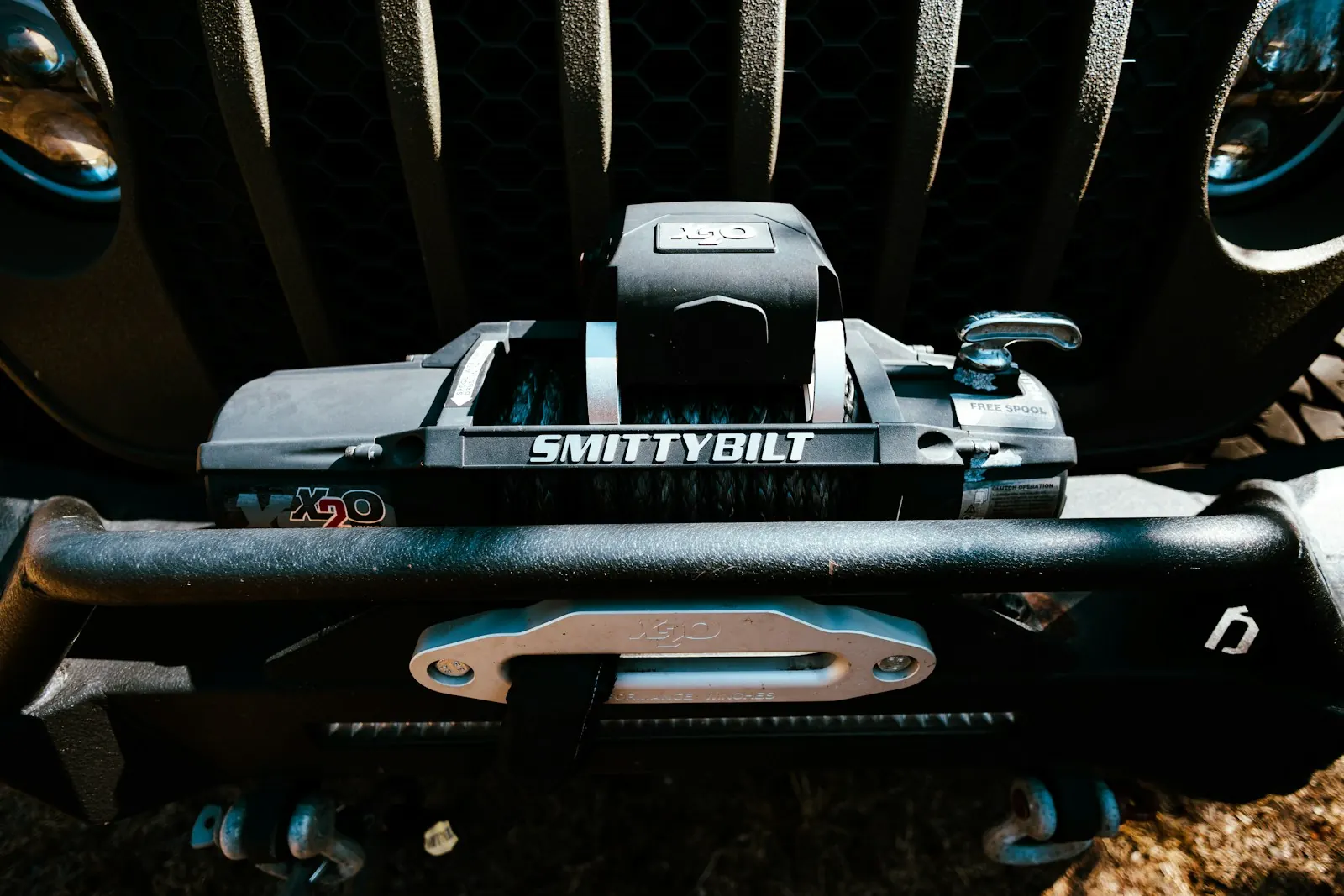
The JL has two factory-rated recovery points at the front frame horns — the painted tow hooks are anchored directly to the frame. The rear tow hooks are also rated. Aftermarket front bumpers often include shackle receivers or D-ring tabs that are rated higher. The factory tie-down loops in the cargo area are NOT rated for vehicle recovery.
# JL Wrangler Recovery Points: What's Rated and What Isn't
Using the wrong recovery point is how you pull a bumper off a Jeep — or worse, send a snatch block back through a windshield under load. The JL has real recovery points from the factory. Knowing exactly where they are and what they can handle takes two minutes and could save someone's day on trail.
Front tow hooks (frame-mounted):
The JL ships with two front tow hooks — the angled hooks visible on the front frame horns. These are welded to mounting brackets that bolt directly to the frame. They are rated recovery points. Most JL front tow hooks are rated at the vehicle's GVWR or higher.
How to use them: Attach a shackle (3/4" or 7/8" screw-pin D-ring or bow shackle) to the hook. Run your recovery strap, snatch strap, or kinetic rope to the shackle. Never loop a strap directly around the hook without a shackle — it can slip and shock load in an unexpected direction.
Rear tow hooks (frame-mounted):
The JL has rear tow hook mounts integrated into the rear frame rails. On most trims, there are two rear hooks visible at the bottom corners of the rear bumper area. These are also frame-mounted and rated.
What's NOT a recovery point:
- Tie-down loops in the cargo area (rated for cargo, not towing)
- Stabilizer bar links or track bars
- Trailer hitch receivers (unless rated — most factory JL hitches are rated for towing, but verify before using as a recovery anchor)
- Aftermarket accessories bolted to body panels rather than frame
D-ring mounts (shackle receivers):
Most aftermarket front and rear bumpers include integrated shackle receivers — threaded or bolted mount points that accept a D-ring directly. These are cleaner than hooks: the D-ring sits flush, doesn't catch brush, and swivels to the load angle.
Standalone shackle receiver mounts can also be bolted directly to the factory tow hook mounting points without replacing the bumper.
Recovery hitches:
A 2" receiver-to-D-ring adapter ($25–$50) converts the factory trailer hitch receiver to a rear recovery point. Verify the factory hitch's tow rating first — JL Sport factory hitches are typically rated at 3,500 lbs. Match the shackle and strap rating to the lowest rated component.
| Shackle size | Working load limit | Common use |
|---|---|---|
| 3/4" D-ring | 4.75 tons | Sufficient for JL recovery |
| 7/8" D-ring | 6.5 tons | Better for snatch block rigging |
| 1" D-ring | 8.5 tons | Overbuilt for most JL use but fine |
The JL's GVW is approximately 5,500–6,000 lbs depending on trim. A 3/4" D-ring is technically sufficient but the 7/8" is the standard for trail recovery — the cost difference is minimal and the margin matters when you're running a kinetic rope at full stretch.
- Always use a strap dampener (a floor mat, heavy jacket, or purpose-made strap dampener) over the recovery strap midpoint. If a fitting fails under load, the dampener reduces snap-back energy significantly.
- Screw-pin shackles: tighten the pin fully, then back off 1/4 turn to prevent seizing. Tape the pin after seating.
- Never stand in line with a recovery strap under load — the energy release direction if anything fails is along the strap axis.
- Check the recovery point anchor bolts after every recovery. Frame mounting bolts can loosen under shock load.
- 7/8" D-ring shackles (pair): $25–$45 (rated, with safety pin)
- Shackle receiver mounts for factory tow hook locations: $50–$120 (Warn, Rugged Ridge)
- Recovery hitch adapter (2" receiver to D-ring): $25–$50
You don't need to spend a lot here. Two quality 7/8" D-rings and an understanding of which points are rated covers most JL recovery situations. The expensive part of recovery is the rope and the strap — get those right first.
Tools required
- 22mm or 7/8" wrench (for D-rings)
- torque wrench
Related
Written and maintained by an AZ wheeler and driveway wrencher. How we source guides. Always cross-reference your factory service manual — modifications affect vehicle safety and warranty. Work at your own risk.