Running 37" Tires on the JL — Rubicon vs Non-Rubicon Fitment
The JL Rubicon is the only Wrangler that fits 37s from the factory without modification — and even on the Rubicon you will get occasional flex rubbing. On every other JL trim, 37s require a lift and a plan.
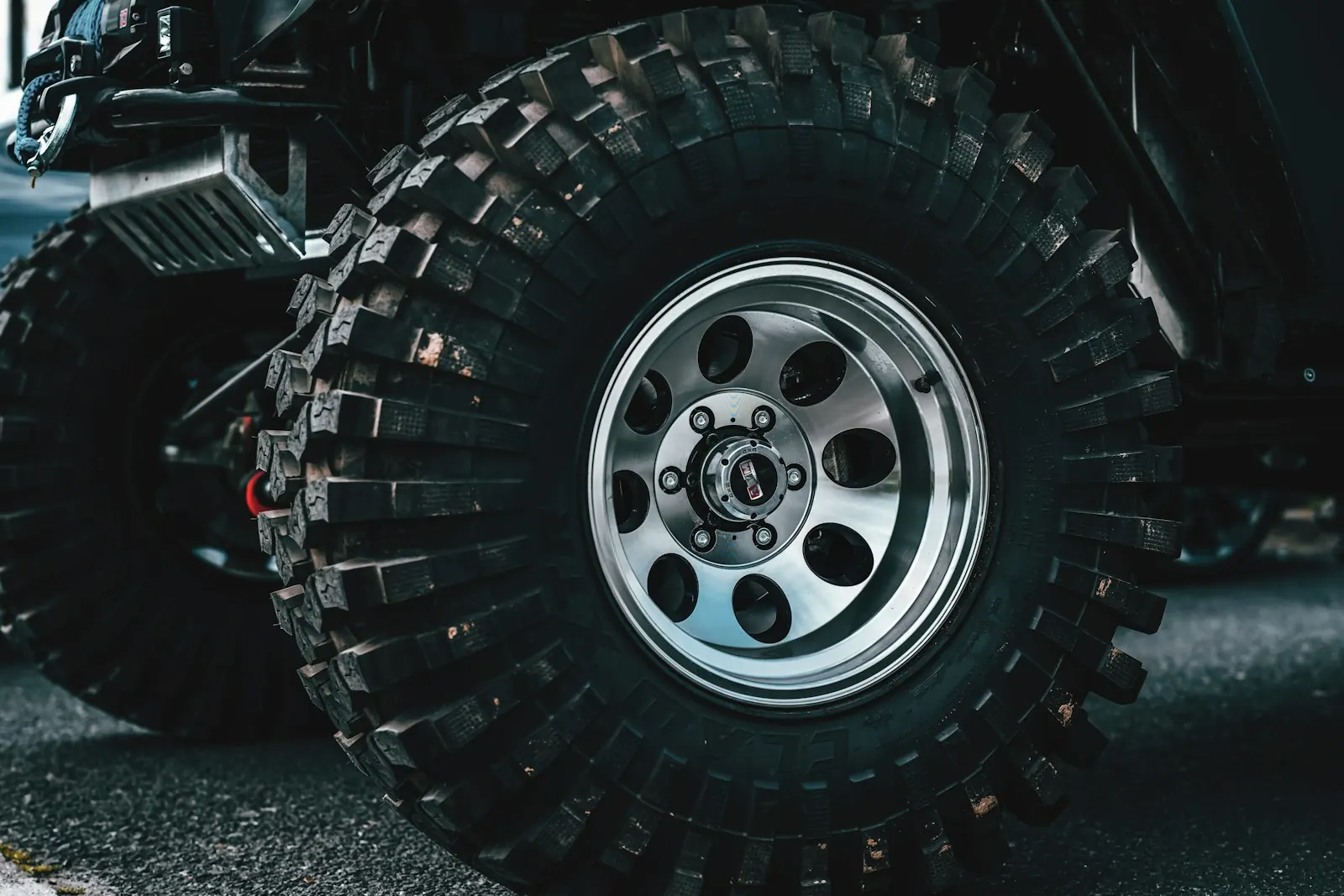
Jeep was deliberate about the JL Rubicon's tire clearance. The Rubicon comes with a 1" front lift, wider fender flares, and 33" tires from the factory — but the geometry allows for 37s with minimal clearance work at full flex. In practice, 37s on a stock Rubicon rub at full steering lock combined with full bump travel. The rub points are the front upper control arm at the coil bucket and the rear fender liner at full droop. Most Rubicon owners address this with a 1"–1.5" spacer lift or minor fender liner trimming without a full kit.
Non-Rubicon JL trim levels (Sport, Sport S, Sahara) are a different situation. The factory fender openings are narrower, the suspension geometry is lower, and the tires are 31"–33" from the factory. Fitting 37s without a lift results in rubbing at every steering and suspension extreme — you need 2.5" of lift minimum, and 3.5" is the more comfortable clearance baseline. At 2.5" you will still need fender liner removal (not cutting, pulling the liner) at the rear, and the front upper control arm area needs attention at full steering lock. At 3.5", 37s fit cleanly across all four corners.
The tire choices matter for fitment as much as the size. A 37x12.5R17 is the most common spec, and all three recommended options here are in that range. Note that actual measured width varies by brand — the BFG KM3 at 37x12.5 measures close to nominal, the Nitto Trail Grappler runs slightly narrower, and the Toyo Open Country MT runs slightly wider depending on the wheel backspacing. On a 17x8.5 or 17x9 wheel with 4.5"–5" backspace, all three mount cleanly.
Regear is not optional at 37s. Stock gear ratios on the Sahara (3.45) and Sport (3.73) were engineered around 31"–33" tires. Adding 37s effectively drops your RPM at highway speed and loads the drivetrain heavily off-road. The Sahara with 3.45 gears and 37s is genuinely painful to drive — low-end torque evaporates, the transmission hunts gears on grades, and trail crawl ratios are inadequate. Plan for 4.56 gears with 35s, 4.88 gears with 37s on Sahara/Sport. Rubicon owners with the 4.10 stock ratio can run 37s tolerable, but 4.56 is the right answer for serious trail use.
TPMS: The JL uses a direct TPMS system — sensors in each wheel. When you move to aftermarket wheels, the sensors must either be transferred from factory wheels or new sensors purchased and programmed. TPMS sensors for the JL are vehicle-specific; verify compatibility before ordering.
Steps
- If installing new wheels alongside new tires, mount tires on new wheels at a tire shop — spec 4.5"–5" backspacing for lifted JL builds.
- Verify TPMS sensors are transferred or new compatible sensors are installed before mounting.
- Lift the vehicle on jack stands and remove factory wheels.
- Install new wheel/tire assemblies. Torque lug nuts to 100 ft-lb in a star pattern.
- Lower the vehicle and re-torque after 50 miles.
- Turn steering wheel to full lock in both directions and articulate suspension through full travel (ramp or spotter needed for this) to check for rub points.
- If rubbing is present: identify the location and address — rear fender liner removal is a 20-minute task, front upper control arm rub may require trim cutting or a minor lift correction.
- If no regear is yet planned, reset tire size in the vehicle's computer (speedometer calibration). JL uses the Uconnect system; some builds use a programmer or dealer reflash for this.
Why it works
- 37s are the meaningful capability threshold for serious trail work — more traction footprint, more ground clearance, better over-rock rollover
- On the Rubicon, the modification scope is genuinely minor — the vehicle was designed to accommodate them
- BFG KM3, Nitto Trail Grappler, and Toyo OPMT are all proven tires with extensive JL trail-use history
- Proper 37s make the JL look proportional — the body was designed with large tires in mind
Trade-offs
- Non-Rubicon fitment requires 2.5"+ lift — that cost is additive to the tire cost
- Regear is functionally required on Sport (3.73) and Sahara (3.45) — budget an additional $1,800–$2,400 for a proper gear change
- 37s are heavy — rotating mass increase affects acceleration, braking, and fuel economy noticeably
- TPMS sensor compatibility requires verification for aftermarket wheels; factory sensors may need reprogramming
- A full set of 37s plus a quality wheel set plus regear is a $4,000–$5,000 package total — budget realistically
Tools required
- floor jack
- jack stands
- torque wrench
- lug wrench
- TPMS programming tool (optional)
Parts
| Part | Vendor | Est. price |
|---|---|---|
| BFGoodrich Mud-Terrain T/A KM3 37x12.5R17 | BFGoodrich | ~$320 |
| Nitto Trail Grappler M/T 37x12.5R17 | Nitto | ~$295 |
| Toyo Open Country M/T 37x12.5R17 | Toyo | ~$285 |
Sources
- Jeep JL Wrangler Tire Fitment Guide — Quadratec
- BFGoodrich KM3 Tire Sizes and Specs
- Nitto Trail Grappler Product Page
Related
- Wheel Selection for the JL — Steel, Alloy, and Beadlock
- Mid-Tier Lift Kit — Spring Lift with Geometry Correction ($600–$2,000)
- Re-Gearing the JL — 4.56 and 4.88 Ratio Selection
- All Jeep Wrangler JL guides & tools
- Browse the full DIY database
Written and maintained by an AZ wheeler and driveway wrencher. How we source guides. Always cross-reference your factory service manual — modifications affect vehicle safety and warranty. Work at your own risk.