Hi-Lift Jack Use and Safety on the XJ
A Hi-Lift will lift, winch, clamp, and spread — and it will also put its handle through your jaw if you treat it casually, so learn the discipline before you learn the tricks.
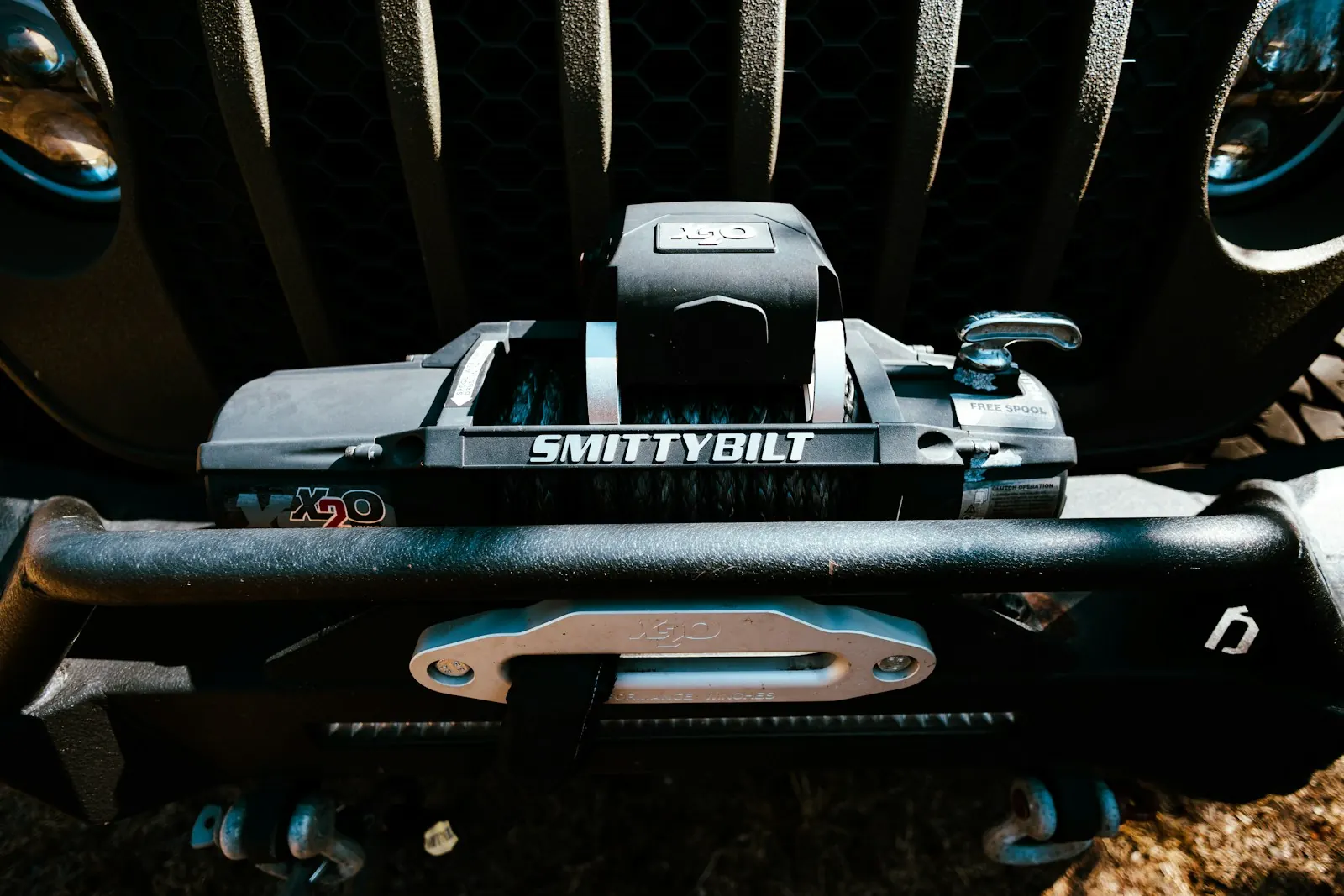
The 48-inch cast/steel Hi-Lift is rated at 4,660 lb and has been the standard American trail jack for a century. Here is the honest part first: a stock XJ has nowhere safe to use one. The unibody pinch seams crush under a Hi-Lift nose, and the factory bumpers bend before the tires leave the dirt. The jack earns its spot on your rig only after you have rated steel bumpers with jack points, rock sliders, or the Lift-Mate wheel attachment — which is also why it belongs in the same planning conversation as your bumper and slider budget, not before it.
Skip it on a mild build. A bottle jack on a wood block changes a trail tire with far less drama. Carry the Hi-Lift when the build and the terrain say you will be lifting a corner out of a rut, stacking rocks under a hung-up axle, or hand-winching off a dead trail.
Steps
- Confirm your lift points before the jack goes on the rig. Rated aftermarket bumpers with jack pockets and sliders with a flat jacking surface are the only body-mount options. On sliders, check the standoff first — a slider that hugs the body lets the jack nose rotate into the quarter panel as the rig settles, and that dent is permanent.
- Function-check the jack before every trip. Run the climbing mechanism through full travel both directions and listen for crisp pin clicks. Lube the pins with a dry silicone or graphite lube — thick grease collects grit and makes pins stick, which is how a loaded jack free-falls. Carry the Fix-It Kit; pins and springs are trail-replaceable.
- Stage the lift. Transmission in park (or first gear on a manual), parking brake set, and chock the diagonal wheels. A Hi-Lift on soft ground needs the Off-Road Base or a 4x4 block under it, or it will bury itself instead of lifting the Jeep.
- Set the nose plate square and fully engaged on the jack point, bar vertical. A tilted bar gets worse as the load rises — the jack lifts in an arc, and the top of that arc leans the rig away from the bar.
- Raise with full, smooth strokes and both hands on the handle. Keep your head and body out of the handle's arc, keep your thumbs wrapped with your fingers rather than around the far side of the grip, and never let go mid-stroke. When you are not actively pumping, clip the handle upright against the bar. A loaded handle stores real spring energy; the classic Hi-Lift injury is a face hit from a handle the operator thought was at rest.
- Respect the wobble. A rig on a Hi-Lift is a load balanced on a hinge — it can swing sideways off the jack with little warning. Never put any part of your body under a vehicle held only by a Hi-Lift, and keep bystanders clear of the fall line. This is a recovery tool, not a service jack; maintenance work waits for a floor jack and stands.
- Use the Lift-Mate to raise a tire directly by the wheel when you need to fill a hole, place traction boards, or stack rock under an axle. It hooks the rim and lifts the wheel itself, which sidesteps the dead travel of lifting a flexed-out suspension — and it works on a stock XJ, making it the one Hi-Lift accessory worth carrying before armor.
- Lower under control. Flip the reversing latch only while the handle is at rest against the bar. On the way down the handle carries the load through every stroke — this is the most dangerous phase of the lift, so move the handle in full strokes to the bar and never feather it.
- For hand-winching, the Off-Road Kit converts the jack into a roughly 4,000 lb come-along using chain and hook rigging. It is slow — you re-rig every few feet of bar travel — but it will walk a dead XJ off a trail with no winch on the bumper. Rig to rated recovery points only, never to a tow ball.
- Stow it bolted down. A 30 lb steel bar loose in the cargo area is a projectile in a rollover. Hood hinge mounts are traditional but exposed to theft and hood flutter; a tire-carrier or interior floor mount holds it better. Torque the mount hardware and check it after every washboard road.
- After mud or water crossings, rinse the mechanism, let it dry, and re-lube. A rusted-solid Hi-Lift is trail jewelry, not equipment.
Why it works
- One tool that lifts, winches, spreads, and clamps, with no electrical draw and no line to spool
- Lift-Mate attachment makes it useful even on a stock XJ for tire lifts and traction board placement
- Field-serviceable with a $15 pin-and-spring kit; nothing on it needs a shop
- 4,660 lb rating covers a loaded XJ with margin
Trade-offs
- Genuinely dangerous with sloppy handle discipline — most injuries are to the face and jaw
- Useless as a body-lift jack until you have rated bumpers or sliders, which is real money
- Unstable by design; the rig can walk off the jack sideways, and you can never work under it
- 30 lb of steel that needs a dedicated, rattle-free mount
Tools required
- Wheel chocks
- Leather gloves
- Safety glasses
- 4x4 wood block or Off-Road Base for soft ground
- Torque wrench (if installing a mount)
Parts
| Part | Vendor | Est. price |
|---|---|---|
| Hi-Lift 48" Cast/Steel Jack (HL-485) | Hi-Lift / 4WD retailers | ~$150 |
| Hi-Lift Lift-Mate wheel attachment (LM-100) | Hi-Lift | ~$55 |
| Hi-Lift Off-Road Base (ORB) | Hi-Lift | ~$40 |
| Hi-Lift Off-Road Kit for winching (ORK) | Hi-Lift | ~$110 |
| Hi-Lift Fix-It Kit spare pins and springs (FK-1) | Hi-Lift | ~$15 |
Sources
- Hi-Lift Jack Co. — official product and safety information
- NAXJA — Hi-lift jack points
- Cherokee Forum — Locations on XJ for Hi-Lift jacking
- JeepForum — How do I safely use a high lift jack
Related
- Traction Boards — Use, Placement, and Limits
- Kinetic recovery rope — modern strap replacement
- Recovery Gear Starter Kit for the XJ — Kinetic Rope, Shackles, and Boards
- All Jeep Cherokee XJ guides & tools
- Browse the full DIY database
Written and maintained by an AZ wheeler and driveway wrencher. How we source guides. Always cross-reference your factory service manual — modifications affect vehicle safety and warranty. Work at your own risk.