Front Driveshaft — CV Joint Replacement
A TJ front driveshaft that vibrates is most often a worn u-joint or a worn double-cardan (CV) centering assembly; rebuilding costs $60 to $200 in parts. If the Jeep is lifted more than about 4 inches and the shaft was never changed, a rebuild only delays the vibration, and a custom shaft built for your angle is the real fix.
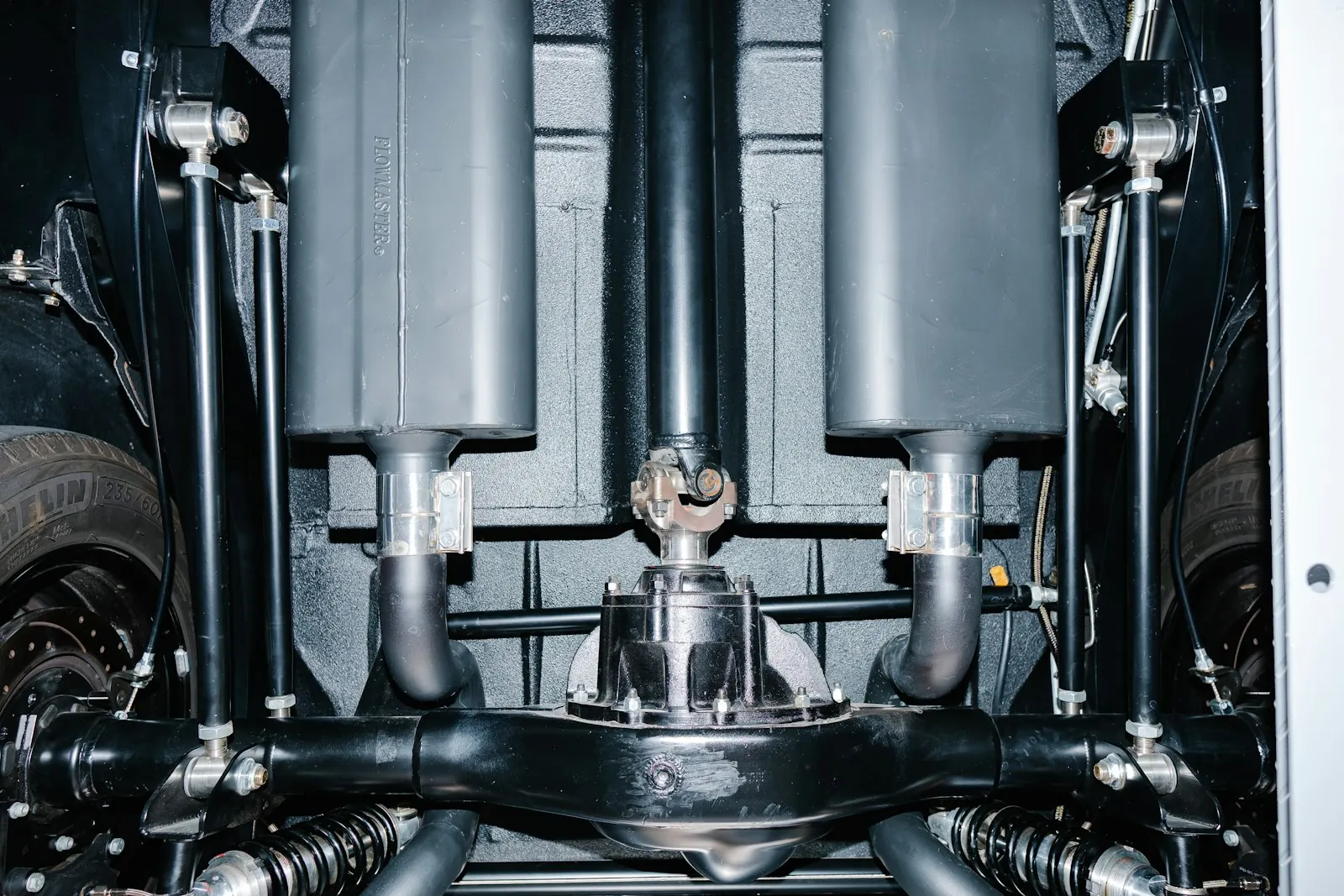
Start by identifying what you have, because the right parts depend on it. Look at the shaft from underneath: count the joints. A plain shaft has one u-joint at each end. A double-cardan shaft has a third assembly, a pair of u-joints back to back with a short centering section, at one end. Which TJ trims came with which shaft has been described differently by different sources, so treat the following as a prompt to check your own Jeep rather than a rule: read the stamped part number or the joint cap size, match it to the vendor's fitment tool for your year and axle, and do not order from the trim name alone. The service manual is the final word for torque values on your year.
Symptoms that point to the front shaft. A vibration that shows up at a repeatable road speed (often in the 40 to 60 mph range) and changes with the front axle engaged is the usual sign. A clunk when you shift between 2WD and 4WD, or when you let off the throttle, points to a worn joint. Rust-colored dust at the cap edges is the sign of a joint that has lost its grease. On a double-cardan shaft, grab the shaft near the centering section and try to wiggle it; any visible play in the center joint means the centering ball and spring are worn.
Rule out the cheaper causes first. Before pulling the shaft, check tire balance and out-of-round tires, a bent wheel, a loose or worn track bar, a bent front axle, and a failed pinion bearing. A shaft that is out of phase or bent will also vibrate. Roll the shaft by hand with the Jeep on stands and watch for runout; a bent tube is cheaper to replace than to diagnose twice.
Why lift changes everything. A driveshaft's joints work well at small angles and poorly at large ones. A lift raises the axle relative to the transfer case, so the front shaft angle steepens, and the joint at the pinion works harder. A plain shaft handles a small lift. Past 3 to 4 inches, or with a long-arm kit or a rear slip-yoke eliminator, the angle can exceed what a standard joint tolerates, producing vibration even with brand-new joints. A double-cardan joint spreads the angle across two joints and is the standard answer. For that case, see slip yoke eliminator kits for the TJ for the rear half of the same conversation.
Rebuild versus replace. Greaseable Spicer or Neapco joints cost about $25 to $40 each; a rebuild kit with a centering yoke and spring runs about $165 to $200 (Denny's lists one for the 1330 series). A custom shaft from Tom Wood's or a similar builder runs about $500 to $600, and arrives with correct length and phasing for your lift. If the existing shaft's tube is straight and the yokes are undamaged, rebuild; if the yokes are chewed, the tube is bent, or you have changed your lift height, replace.
Steps
- Park on level ground, chock the rear wheels, raise the front on jack stands under the frame rails, and put the transmission in neutral and the transfer case in neutral if your model allows it. Never work under a Jeep supported by a jack alone.
- Mark both ends of the shaft and the matching yoke or flange with a paint marker so you can reinstall it in the same orientation. A shaft refitted 180 degrees out of phase will vibrate.
- Remove the strap bolts at the axle pinion yoke. Tape the u-joint caps together so they do not fall off and lose their needle bearings. Remove the bolts at the transfer-case end. Bolt sizes vary by year and joint style; use the correct socket and avoid rounding the heads.
- Lower the shaft and slide it out. Support the free end so the transfer case output is not hanging.
- On the bench, clamp the yoke in a vise with soft jaws. Remove the snap rings from the old joint, then press or tap the caps out with a socket slightly smaller than the cap and a larger one on the receiving side. A u-joint press speeds this up, and a ball peen hammer on a socket works if you support the yoke squarely.
- Clean the yoke bores with a wire brush and inspect for wear or elongation. If a cap bore is oval or burred, the yoke needs replacing, not new joints.
- Install the new joints with the grease fitting oriented as the kit instructs. Press the caps in evenly, fit the snap rings, and tap each yoke with a hammer to seat the joint; it should move freely with no binding.
- On a double-cardan shaft, replace both joints and the centering ball and spring at the same time. Follow the kit's instructions for the spring's orientation. A worn centering assembly rarely wears alone.
- Pump the joints with chassis grease until grease shows at all four cap seals. Rotate the joint by hand and confirm no stiff spots.
- Reinstall the shaft to your paint marks. Tighten the strap bolts and flange bolts to the service manual values. Published figures vary between sources, so check yours. Use thread locker on the strap bolts where the manual calls for it.
- Lower the Jeep and test drive: accelerate through 40 to 60 mph on a straight road, in 2WD and in 4WD high on a loose surface. A remaining vibration points to another cause.
Why it works
- A rebuild restores smoothness for $60 to $200 and a few hours.
- Greaseable joints extend service life and let you check wear at each oil change.
- A custom double-cardan shaft fixes vibration at lift heights where rebuilding cannot.
- Doing the job reveals worn axle yokes, pinion seals, and transfer-case output seals while you are there.
Trade-offs
- Rebuilding a plain shaft at 4 inches or more of lift postpones the problem rather than curing it.
- Press-fitting a centering assembly without a proper press or the maker's instructions can damage the new parts.
- Cheap no-name joints fail within a season; buy Spicer, Neapco, or another recognized brand.
- Incorrect phasing, the wrong joint size for your yoke, or skipped alignment marks can cause a vibration that mimics a bad joint.
- A bent shaft tube cannot be rebuilt around; replace it.
- Costs and sources. Spicer 5-213X greaseable joint: about $28 each. Centering yoke kit (Spicer 211179X listed above): about $75. Denny's rebuild kit: about $165. Custom shaft: about $525 and up. Confirm each part number against a fitment lookup for your year and axle before buying, since the part numbers in the listing above came from earlier research and have not been rechecked. Pair this with TJ NP231 transfer case service so that the output seals and shaft are inspected together.
Tools required
- floor jack
- jack stands
- 12mm socket
- 13mm socket
- torque wrench
- ball peen hammer
- u-joint press or vise
Parts
| Part | Vendor | Est. price |
|---|---|---|
| Spicer 5-213X greaseable u-joint (Rubicon 1330 CV) | Spicer | ~$28 |
| Spicer 211179X CV centering yoke + spring kit (TJ Rubicon) | Spicer | ~$75 |
| Tom Wood's custom CV front driveshaft (TJ Rubicon, 1330) | Tom Wood's | ~$525 |
| Denny's rebuild kit — TJ Rubicon 1330 CV (2 u-joints + centering yoke) | Denny's Driveshaft | ~$165 |
Sources
- Denny's TJ Rubicon 1330 CV Rebuild Kit
- WranglerTJ Forum — Driveshaft torque specs
- Quadratec — Wrangler TJ Driveshaft Parts
Related
Written and maintained by an AZ wheeler and driveway wrencher. How we source guides. Always cross-reference your factory service manual — modifications affect vehicle safety and warranty. Work at your own risk.