NP231 Transfer Case — Service and Weak Points
The NP231 in a TJ is a tough chain-driven transfer case: the gears and chain usually outlast the Jeep, and the real weak spots are the rear output bushing and seal, the 2.72:1 low range, and the stock 23-spline output shaft. Change the fluid every 30,000 miles, and plan a slip-yoke eliminator only once lift or vibration gives you a reason.
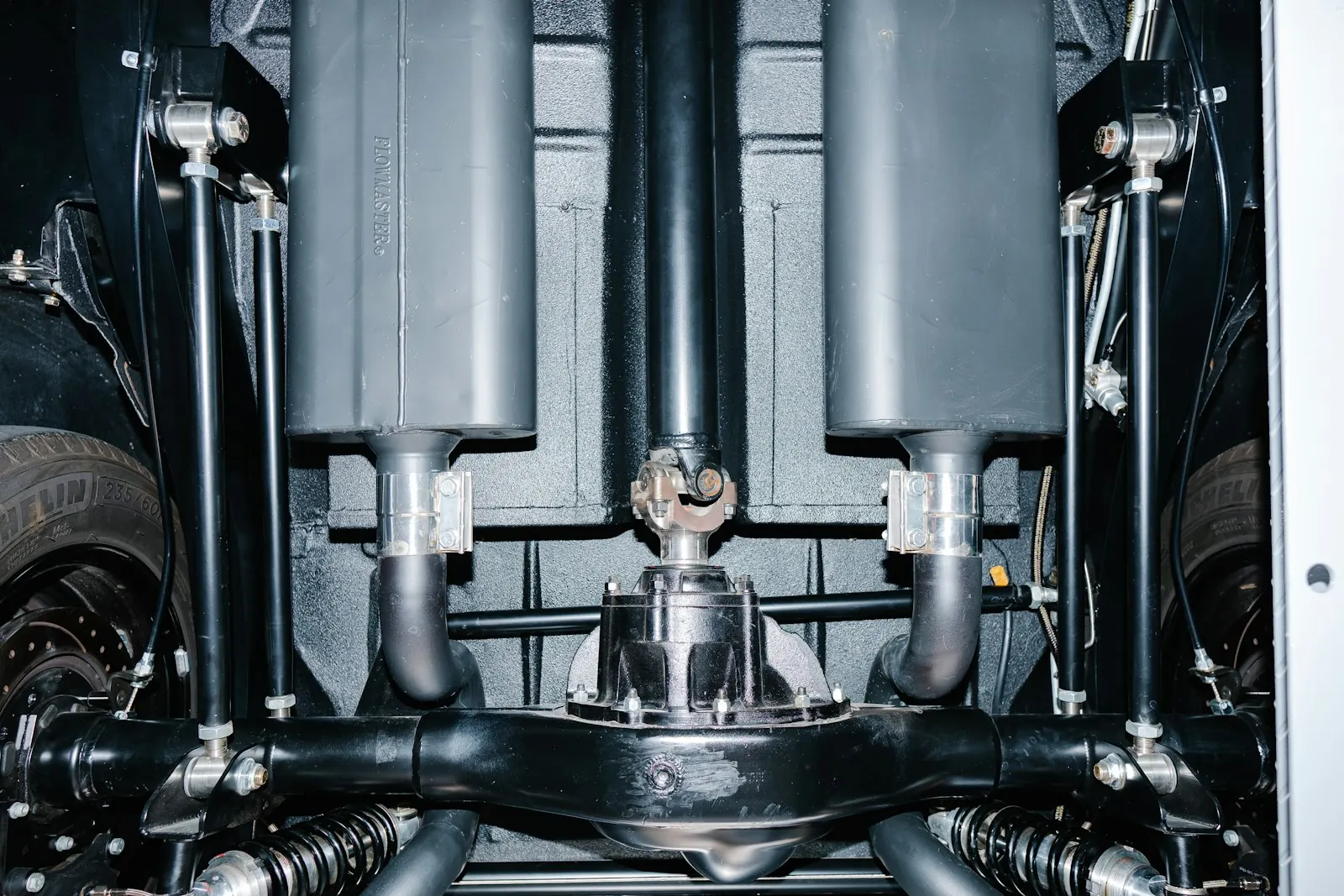
The NP231 (also stamped NV231 on later cases) bolts behind the AX-15, NV3550, or automatic of every non-Rubicon TJ. It is a part-time 4WD case: you pick 2WD, 4-Hi (locked, 1:1), neutral, or 4-Lo (locked, 2.72:1). The Rubicon uses the NV241OR with a 4:1 low range, which is a different case with a different crawl ratio. Understanding that distinction sets honest expectations: the 231 will keep a 4.0L Jeep moving over trails, but its 2.72:1 low range limits how slowly and controlled you can crawl, and that limit is more noticeable with taller tires unless you regear the axles (see the regear guide).
What the 231 does well. The chain, drive sprockets, and planetary assembly are rarely the failure. Owners put 200,000 miles on these with fluid changes and nothing else. Mopar specifies ATF+4, and the transfer case fluid guide covers the step-level service, including the fill-to-the-hole method (most Jeeps take roughly 1.5 to 2 quarts, not a fixed number), the rule to crack the fill plug before draining, and the aluminum-housing torque limits. Water is the biggest enemy: milky fluid means the bearings have a short life ahead unless you change it right away.
Where it fails. Most problems start at the rear. The tail housing contains a bronze bushing that supports the slip yoke. When that bushing wears, the yoke wobbles, the rear output seal loses its seat, and you get a leak that returns after every seal replacement. Check by grabbing the rear yoke and pushing it up, down, and sideways with the Jeep on stands; there should be no perceptible play beyond the spline slop. The front output seal is the second common leak; see the front driveshaft guide. Less common but real: a plugged vent that pressurizes the case, a chain that has stretched after high mileage (heard as a faint whine in 2WD and 4-Hi that changes with load), and shift-fork pad wear that makes the case jump out of 4-Lo.
Seal and bushing repair. If the case is otherwise healthy, a rear seal and tail-housing bushing kit costs $25 to $60 and the repair is a couple of hours: remove the rear driveshaft, drain the case, pull the yoke nut and yoke, drive out the old seal and bushing with a slide hammer and bushing driver, press in the new bushing, install a new seal, and refill. This is the correct fix on a stock-height Jeep.
The slip-yoke question. The factory rear output is a 23-spline shaft with a long slip yoke. The yoke slides on the shaft as the rear axle moves, and the driveshaft is a conventional two-joint shaft. Lift changes the driveshaft angle: higher lift steepens the angle at the transfer case end, which loads the slip joint and the tail bushing, and shows up as highway vibration and chronic leaking. A slip-yoke eliminator replaces the tail housing and output shaft with a short fixed-flange shaft (usually 32-spline), and the driveshaft is replaced with a CV (double-cardan) shaft that has its own slip spline. That changes the geometry completely, which is why the conversion is paired with the new driveshaft rather than sold as a standalone fix.
When an SYE is worth it. The usual threshold is about 3 inches of lift, or any smaller lift where a worn bushing and vibration refuse to be cured. Below that, replacing the bushing and seal is cheaper and keeps the original driveline. Above it, SYE is the standard answer, and many TJ owners fit it with a long-arm lift or a 4-inch spring lift. The SYE kit guide walks through the kits and tradeoffs in more detail, so this guide stays on the transfer case itself.
Kit tiers. Budget shaft-only kits sit around $130 to $300 and generally cover the shaft swap but demand more fabrication and driveshaft work from you. Mid-tier kits including a tail housing run around $295 to $425. A premium 32-spline kit such as the JB Conversions Super Short SYE (about $425) is the stronger choice for a heavily built Jeep, since the larger-diameter output handles locker torque with tall tires. Add $400 to $650 for the CV rear driveshaft; shops that build them for TJs include Tom Wood's and Adams. Total SYE conversion is generally $600 to $1,000 before labor.
Measuring for the driveshaft. Have the Jeep at ride height on flat ground. Measure from the face of the transfer case output flange to the face of the pinion flange, with the driveshaft not fitted, and give the driveshaft builder the number along with the U-joint style on the axle end, the flange bolt pattern, and your lift height. Do the measurement after the SYE is installed because the output flange sits farther forward than the stock yoke.
Low-range gearing. Four-to-one low-range gear sets for the 231 exist from aftermarket builders, and they give a more controllable crawl ratio. Plan on four figures for parts and a rebuild, and compare the cost against a regear first, since changing axle gears also helps with tall tires on-road.
Costs and sources. Fluid service: $25 to $40. Seal and bushing kit: $25 to $60. SYE kit: $130 to $425. CV rear driveshaft: $400 to $650. Gear-set low-range options: $1,000 and up. Pair an SYE install with your lift choices so the driveshaft is built once for the final ride height.
Steps
- Identify the case from the tag on the housing. A 231 or NV231 is a standard TJ case; a 241OR means a Rubicon and different parts.
- Change the fluid as described in the transfer case fluid guide and read the drained fluid for water, metal, and burn smell.
- With the Jeep on stands, check the rear yoke for movement and inspect the vent hose and the front and rear output seals for weeping.
- If the rear is leaking and the Jeep is near stock height, replace the tail-housing bushing and rear seal, and keep the slip yoke.
- If you are lifted 3 inches or more, or the leak and vibration persist, plan the SYE: support the case with a jack, remove the rear driveshaft, drain the case, and unbolt the tail housing.
- Install the SYE shaft and housing per the kit's instructions, using the sealant and thread locker the kit specifies, and torque the flange bolts to the manufacturer's figure.
- Install the new CV rear driveshaft sized at ride height, then refill with ATF+4 to the lower edge of the fill hole.
- Test drive at 30, 45, and 65 mph checking for vibration, then re-check for leaks and re-torque the flange bolts after 100 miles.
Why it works
- The 231's gears and chain are durable; most owners only ever need fluid changes.
- A $25 to $60 bushing and seal kit cures most rear leaks on a stock-height Jeep.
- An SYE removes the tail-housing bushing as a failure point, tames lifted-driveline vibration, and uses a stronger output shaft.
Trade-offs
- The 2.72:1 low range limits crawl control, especially with tall tires and no regear.
- A SYE conversion costs $600 to $1,000 including the CV driveshaft, and it changes the driveshaft rather than only the case.
- Water intrusion quickly damages the bearings and the chain, and the symptoms (a faint whine, milky fluid) are hard to notice.
- Shaft-only budget kits shift fabrication and measuring to you, and a badly measured driveshaft causes vibration that is hard to diagnose.
Tools required
- 13mm socket
- drain pan
- fluid pump
- torque wrench
Parts
| Part | Vendor | Est. price |
|---|---|---|
| Valvoline ATF+4 (quart) | Valvoline | ~$9 |
| Mopar ATF+4 (quart) | Mopar | ~$11 |
| JB Conversions Super Short SYE | JB Conversions | ~$425 |
| Teraflex SYE kit | Teraflex | ~$295 |
| Rough Country SYE shaft | Rough Country | ~$130 |
Sources
Related
- Re-Gearing the TJ — 4.56, 4.88, and 5.13 Ratios
- AX-15 Manual Transmission Service
- All Jeep Wrangler TJ guides & tools
- Browse the full DIY database
Written and maintained by an AZ wheeler and driveway wrencher. How we source guides. Always cross-reference your factory service manual — modifications affect vehicle safety and warranty. Work at your own risk.