TJ Rock Sliders — Frame-Mounted Protection for the Rocker Panels
The TJ's rocker panels are the lowest, widest point on the body — and entirely unprotected from the factory. Frame-mounted rock sliders take the hit instead and double as a step. Body-mount-only sliders are not worth buying.
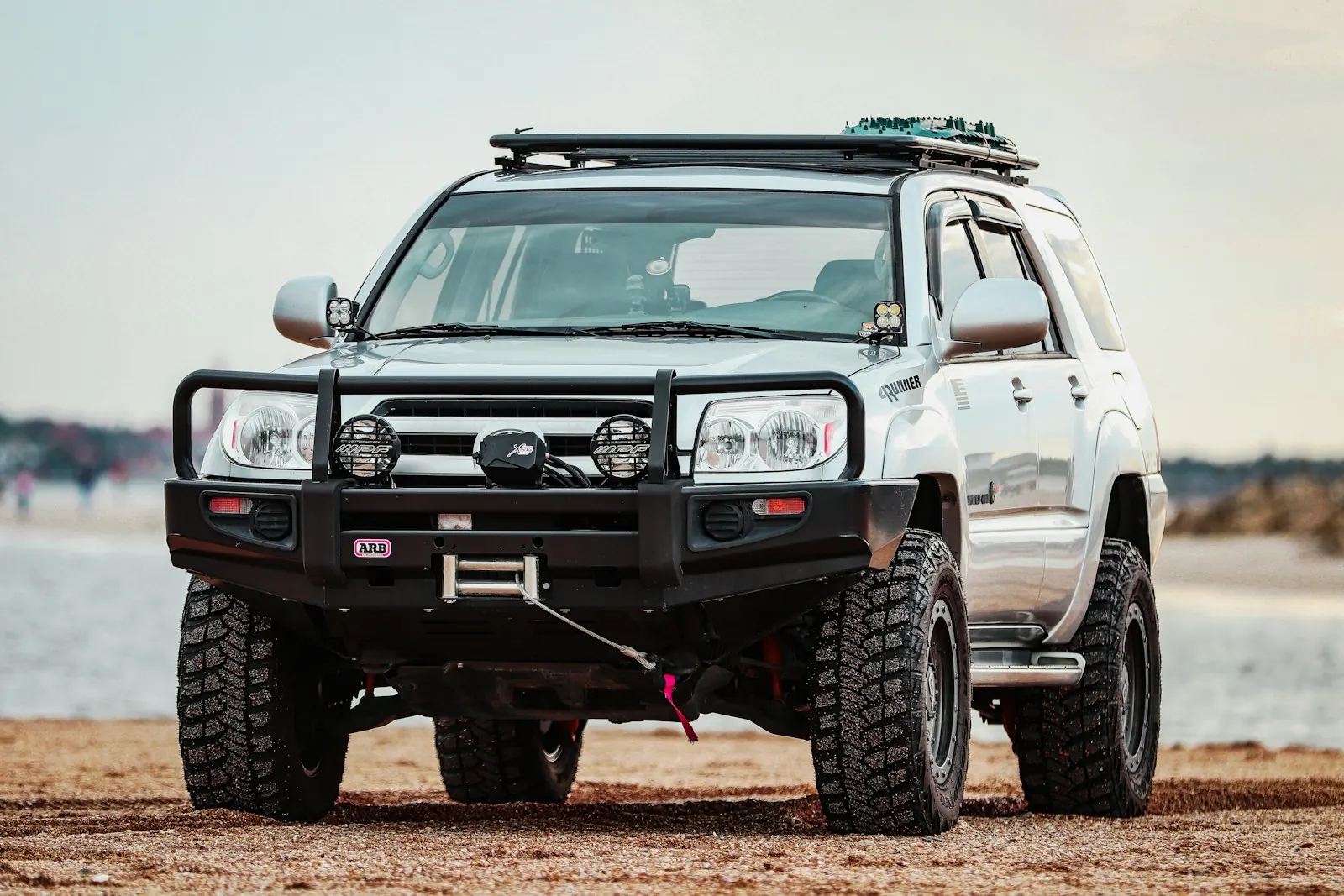
The rocker panel runs along the lower sill between the front and rear wheel openings. On the trail it's the first thing to contact a ledge, a boulder shelf, or a steep sidehillslide. Factory sheetmetal creases on first contact. A slider absorbs and redirects that force — the Jeep rides up over the obstacle on the slider tube rather than jamming the rocker into it.
The critical design detail is frame mounting. Sliders that only bolt to the body are nearly useless for rock use — when the rock hits, the load goes into the body sheetmetal instead of the frame, and you get bent rockers and bent sliders simultaneously. Frame-tied sliders route the load directly into the frame rails, which is where it belongs. Every quality slider in this category — Iron Rock, Poison Spyder, Crawler Conceptz — mounts to the frame. Budget sliders that only bolt to body sheet metal aren't worth the install time.
Tube diameter and wall thickness matter more than brand name. 1.75" DOM tubing at .120" wall is the minimum for trail use. 2" .120" wall is more common on quality sliders and notably stiffer. Anything under .095" wall thickness compresses under rock load.
- Slider kit with hardware
- Impact wrench or breaker bar
- Floor jack and stands
- Drill with appropriate bit if kit requires drilling new frame holes (Iron Rock does not — uses existing frame holes; Poison Spyder does on some configurations)
- Lift and support the TJ. Sliders install most straightforward with the vehicle at working height on jack stands.
- Locate frame mounting points. Most kits use existing holes in the frame rails. Clean rust or debris from the mounting surface.
- Test fit before final torque. Hold the slider in position with hand-tightened bolts, verify fitment at both ends and clearance to body panels.
- Torque frame bolts to spec — typically 40–55 ft-lb on grade-8 hardware. Snug but don't strip.
- Torque body mounting points last. Body mounts go snug, not tight — they're secondary load paths.
- Verify ground clearance is acceptable. Frame-mounted sliders typically add 0–2" below the rocker, which is fine. Full skid-style sliders drop lower and affect approach on flat obstacles.
- Step tubes (the horizontal tube people stand on) create a vulnerable catch point — if you're building a rock crawler that will be on its side regularly, a full rocker guard without a step tube provides cleaner rock-over geometry.
- Check that slider doesn't interfere with stock exhaust hangers or transfer case skid plate. Some kits require relocating a hanger.
- Verify the slider doesn't contact the fuel tank at full articulation on extended-wheelbase TJs.
Budget frame-mounted (Iron Rock Offroad, Rugged Ridge): $260–$310. Mid-tier (Poison Spyder Brawler Lite): $380–$420. Premium (Crawler Conceptz, Shrockworks): $550–$700. The price difference mostly reflects wall thickness, finish quality, and weld quality — all are functional. For moderate trail use, Iron Rock Offroad is the best value.
Tools required
- floor jack
- jack stands
- impact wrench
- drill
- socket set
- torque wrench
Parts
| Part | Vendor | Est. price |
|---|---|---|
| Poison Spyder Brawler Lite Rock Sliders — TJ | Poison Spyder | ~$395 |
| Iron Rock Offroad bolt-on rock sliders — TJ | Iron Rock Offroad | ~$299 |
| Rugged Ridge Atlas Rock Sliders — TJ | Rugged Ridge | ~$260 |
| Crawler Conceptz Ultra Series sliders — TJ | Crawler Conceptz | ~$580 |
Sources
Related
- TJ Steel Rear Bumper — Tire Carrier, Recovery Points, and Hitch
- TJ Skid Plates — What the Factory Already Covers, What It Doesn't, and the Tummy Tuck
- All Jeep Wrangler TJ guides & tools
- Browse the full DIY database
Written and maintained by an AZ wheeler and driveway wrencher. How we source guides. Always cross-reference your factory service manual — modifications affect vehicle safety and warranty. Work at your own risk.