Short-Arm vs Long-Arm: Which TJ Lift You Actually Need
Most TJ owners do not need a long-arm kit. A quality short-arm 3–4 inch lift clears 33s, corrects the geometry, and costs a fraction of a long-arm conversion. The long-arm earns its money only at the extremes — tall lift, 35s, and serious rock work — so match the kit to how you actually wheel, not a forum build thread.
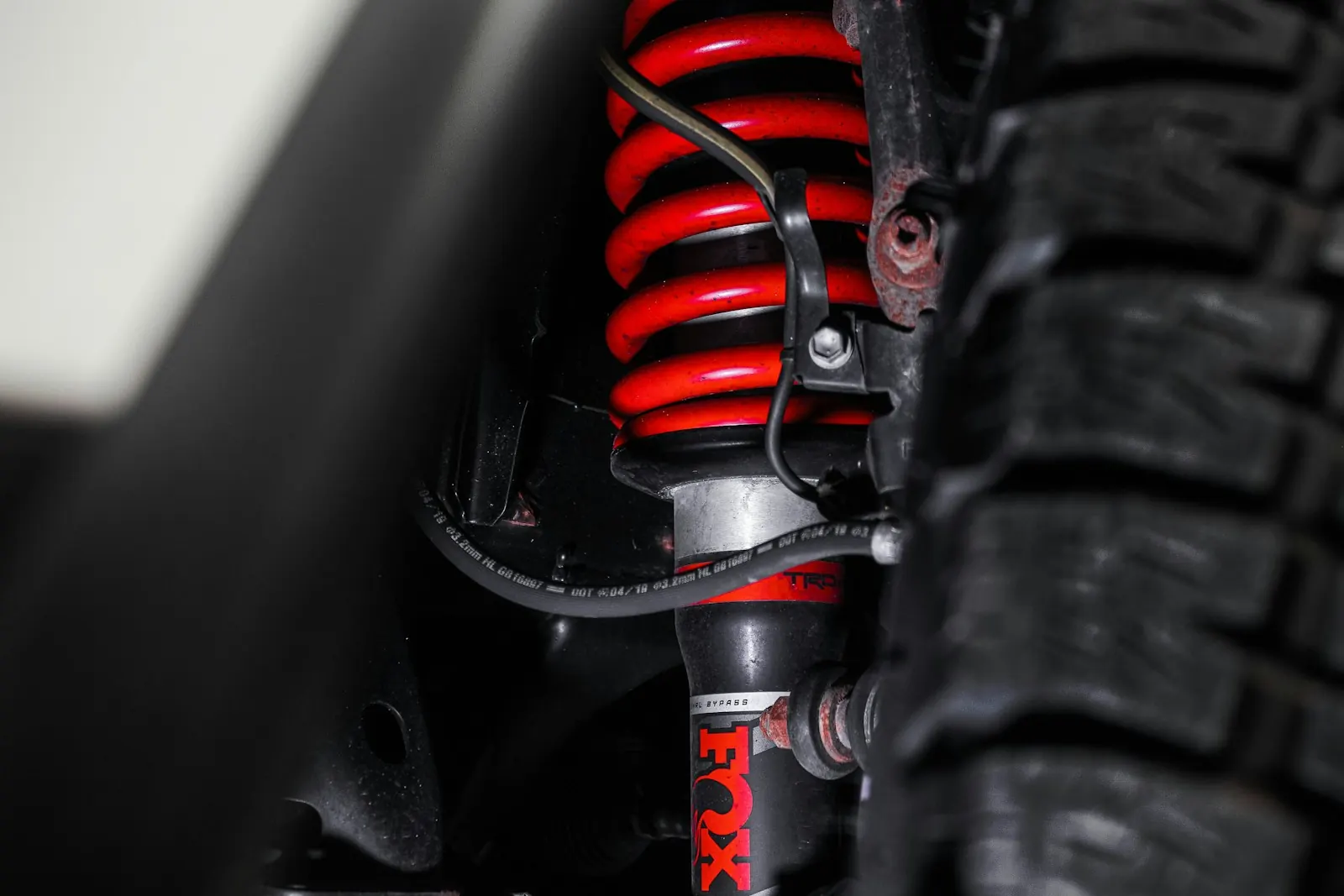
The TJ's short coil-spring control arms work well through about 3.5 inches. Past that the arms get steep, which shortens the wheelbase on compression and makes the ride harsh and the handling vague. A short-arm lift keeps the factory mounts and swaps springs, shocks, and ideally the arms; a long-arm relocates the lower mounts rearward and runs much longer arms for a flatter, smoother arc. Both are covered here with real kit names and prices; for the full menu of lift heights see lift options.
The factory TJ lower control arms are roughly 15–16 inches long, front and rear. As the suspension cycles, the axle swings on an arc whose radius is that arm length. Lift the Jeep 4 inches on stock-length arms and the arms now sit at a steep angle at ride height, so the first few inches of compression pull the axle rearward (front) or forward (rear) hard, which is the "harsh over sharp bumps" complaint. A long-arm kit doubles the arm length to 30-plus inches, so the same 4 inches of lift leaves the arms nearly flat and the axle's arc nearly vertical through its travel. Flatter arc means smoother ride, more usable flex, and less caster change as the suspension moves. That is the entire argument for long-arms. The counter-argument is that the flatter arc is bought with a crossmember or bracket set that hangs below the frame rails, with drilling or welding, and with $1,500–2,500 more money.
At 2.5 inches, Old Man Emu's TJ kit (springs, Nitrocharger shocks, around $900–1,100) is the ride-quality benchmark and clears 32s or a narrow 33 with mild trimming. At 3.5–4 inches for a proper 33, Rubicon Express's 3.5-inch Super-Flex ($1,300–1,600 with adjustable arms), Clayton's 4-inch short-arm ($1,200–1,500), and Metalcloak's 3.5-inch Game-Changer with Duroflex joints ($1,800–2,200) are the kits that ship with the geometry-correction parts already in the box. Rough Country's 4-inch X-Series ($700–900) is the budget entry — the springs and shocks are fine, but budget for an adjustable front track bar and at least adjustable front lower arms on top of it, which closes most of the price gap. Whatever kit you choose, the parts list that keeps a 4-inch short-arm safe is: adjustable front lower arms to set caster, an adjustable front track bar to re-center the axle, adjustable rear uppers to set pinion angle, extended bump stops, and a transfer-case drop or SYE. A budget lift can skip some of that at 2 inches; at 4 inches none of it is optional.
Rubicon Express's 4.5-inch long-arm system ($2,800–3,300) is the most common TJ long-arm on the trail and bolts to a new crossmember with some drilling. Clayton's 4-inch and 6-inch long-arm kits ($2,900–3,600) use a frame-side bracket and are the fabricator's favorite for their weld-in strength. Rock Krawler's 3.5-inch X-Factor long-arm ($2,800–3,400) and Metalcloak's long-arm Game-Changer ($3,000–3,500) round out the field. The Currie/Savvy "mid-arm" is the alternative worth knowing: a belly-up skid plate raises the transfer case ~1.5 inches for breakover clearance while relocating the arm mounts for a longer-than-stock (but not full long) arm, so you gain geometry without a hanging crossmember. Expect a full weekend with a grinder: the factory lower mounts come off, the new crossmember goes in, and every kit needs the arms cycled and checked at full droop. The long-arm install guide has the step-by-step.
For 33s and mixed street-and-trail use, a 3–4 inch short-arm kit with adjustable control arms, an adjustable front track bar, and good shocks is the honest answer for the vast majority of TJs. It rides well, holds alignment, and handles real trails. It also keeps the factory belly line — the transfer-case skid stays where it was, and nothing new hangs below the frame to catch a ledge — and it comes apart with hand tools if you ever want to sell the Jeep stock.
At 4.5 inches and up, on 35s, for dedicated rock work, the long-arm's flatter geometry buys flex and ride quality a tall short-arm can't match. The cost is a bigger kit, drilling or welding new mounts, and reduced belly clearance from the crossmember on the kits that use one. It also makes sense on a TJ that already has a long-arm crossmember from a previous owner, or on an LJ Unlimited, whose 103.4-inch wheelbase tolerates the mounts better. If you are at 35s and still wondering whether the Dana 35 survives, it does not — settle the axle question before the lift budget.
Whichever kit you run, these are the targets after install. Front caster: 6–7 degrees positive on a lifted TJ (factory spec is around 7); below 4 degrees the Jeep wanders and death wobble becomes likely. Set caster with the adjustable front lower arms, then check the front pinion angle — on the TJ front axle, caster and pinion rotate together, so a compromise near 6 degrees caster is normal on a 4-inch lift with a CV front shaft. Rear pinion: 1–3 degrees below the driveshaft angle with a CV/SYE driveshaft, set with the adjustable rear uppers. Track bar: axle centered under the frame within 1/4 inch, measured tire-to-fender both sides. Toe: 1/16–1/8 inch toe-in. Torque control-arm bolts at ride height with the Jeep on its tires, never on jack stands, or the bushings take a permanent set at full droop and tear early.
The adjustable track bar and control arms are what keep the steering safe — they re-center the axle and restore caster. Never lift a TJ without correcting the geometry, or you invite death wobble. Above ~3.5 inches add a slip-yoke eliminator and CV driveshaft for the rear driveline angle; a transfer-case drop is the $40 stopgap that costs you belly clearance. Build short-arm to 33s for almost everyone; reserve the long-arm for the committed 35-inch crawler.
Tools required
- floor jack
- jack stands
- spring compressor
- breaker bar
- torque wrench
Parts
| Part | Vendor | Est. price |
|---|---|---|
| Short-arm lift kit (3-4 in) | Rubicon Express/Rough Country/OME | ~$800 |
| Long-arm conversion kit | Clayton/Rock Krawler | ~$2400 |
| Adjustable front track bar | Currie/Synergy | ~$160 |
Sources
Related
- TJ Lift Kit Options — Coil vs. Long Arm
- Long-Arm Lift System — 4.5"+ for Rock Crawling ($2,000+)
- Track Bar Replacement — TJ Specifics
- All Jeep Wrangler TJ guides & tools
- Browse the full DIY database
Written and maintained by an AZ wheeler and driveway wrencher. How we source guides. Always cross-reference your factory service manual — modifications affect vehicle safety and warranty. Work at your own risk.