Aftermarket Front Bumper for the Jeep Gladiator JT
The factory JT front bumper is plastic-capped sheet metal — it looks reasonably rugged but won't withstand a direct ledge strike, and it doesn't offer a winch mount. An aftermarket steel bumper adds protection, a winch platform, and proper recovery point mounting in one upgrade.
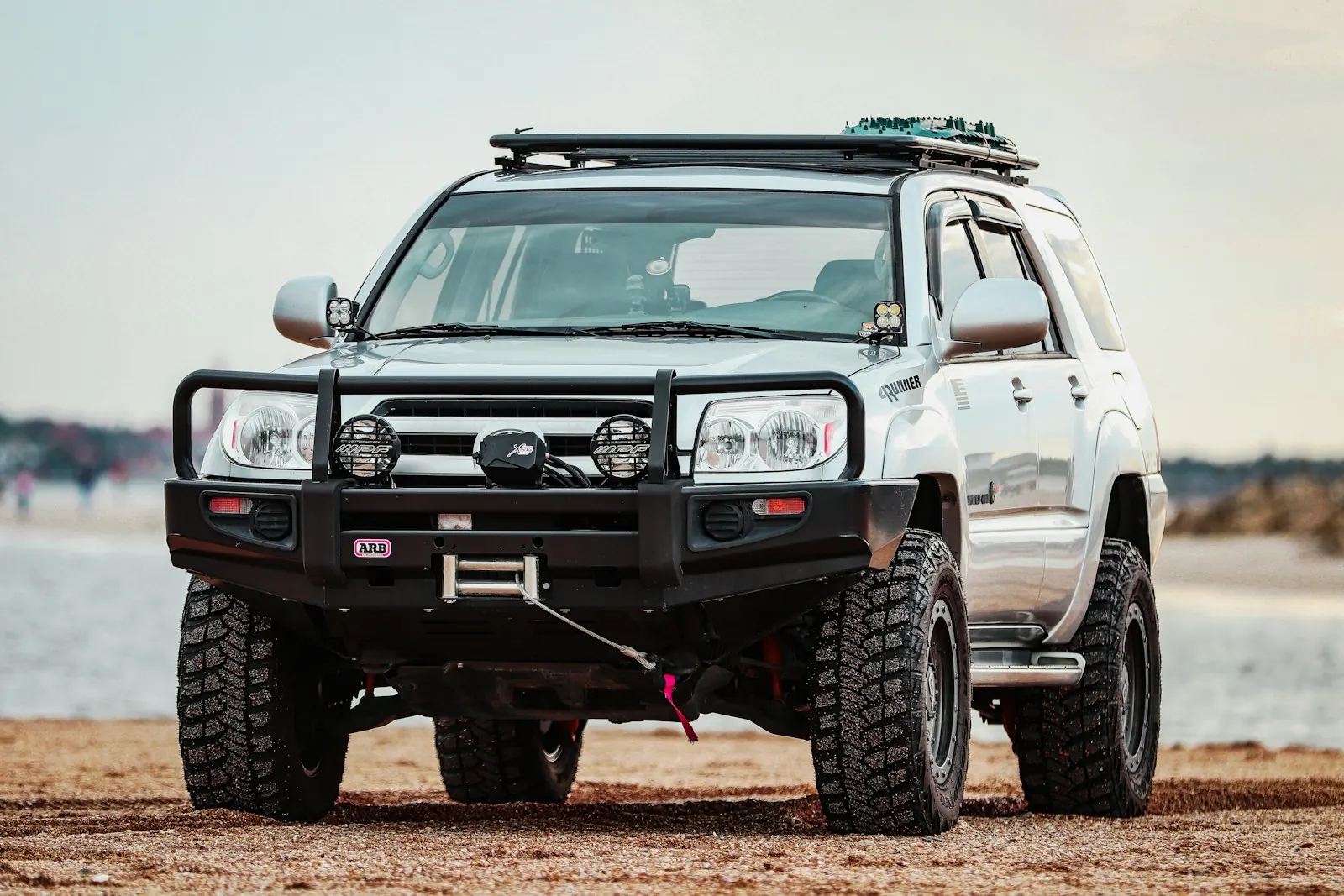
The JT Gladiator's factory bumper bolts to the frame rails at four points. All quality aftermarket bumpers use the same factory mounting holes — no drilling, no modification required. The bumper weight varies significantly by design: tube-style bumpers run 60–90 lbs; full-width steel plate bumpers run 100–160 lbs. The extra weight sits at the extreme front of the vehicle and affects front suspension behavior. Account for the added weight when selecting shocks and, if significant, when choosing coil spring rates.
Factory parking sensor and camera compatibility
The JT Gladiator includes front parking sensors on some trim levels and a forward-facing camera on some packages. Before ordering a bumper, confirm whether your JT has these sensors and whether the replacement bumper provides sensor mounting provisions. Most premium bumpers (Warn, ARB, Fab Fours) offer sensor provisions; budget bumpers often don't.
Bumper categories
Tube-style (Poison Spyder, Rough Country): Tubular steel construction — lighter, allows better approach angle visibility, still provides frame-mounted recovery points. The open design does not protect the radiator from direct debris strikes the way a plate bumper does, but it maintains airflow better and reduces the visual bulk. Correct for trail-oriented JTs where approach angle and weight matter.
Mid-width plate (Warn Ascent, Fab Fours): A full-width or mid-width steel plate bumper that covers the factory bumper footprint. These typically include integrated winch mounts (the Warn Ascent includes a Warn winch platform factory-ready), full-width recovery point tabs, and provisions for auxiliary lights. The tradeoff: approach angle is slightly compromised versus a narrower tube bumper, and weight is higher.
Premium full-width (ARB Sahara, ~$1,399): The benchmark for dual-use trail/street builds. ARB's Sahara design offers factory-quality fitment with provisions for OEM fog lights, parking sensors, and ARB Air Locker air lines. The Sahara is heavier than tube bumpers but integrates seamlessly with the factory look — on a JT that divides time between daily driving and trail work, the ARB balances protection and aesthetics well.
Winch compatibility
Most JT aftermarket bumpers that include a winch mount are compatible with winches in the 8,000–12,000 lb class. Confirm the bumper's winch plate dimensions before ordering a winch — a Warn M8000 (7.5" wide winch body) fits most mid-size bumper fairleads, but a Warn 9.5xp (wider body) requires a bumper with a wider opening. The ARB Sahara is pre-drilled for specific ARB-spec winch mounting; Warn Ascent is optimized for Warn winch fitment.
- Remove the factory front bumper: typically six bolts — two per side mounting to the bumper reinforcement bar, plus two frame rail bolts. The reinforcement bar (the steel bar behind the plastic fascia) also needs to come off — it's bolted to the frame rails separately.
- On JTs with parking sensors: unplug the sensor harness connectors behind the bumper before removing. Label each connector if multiple sensors are present.
- Set the factory bumper and reinforcement aside.
- Thread the new bumper onto the frame rails. Most designs require two people — one to hold the bumper in position, one to start the mounting bolts.
- Start all bolts hand-tight before torquing any of them — this allows the bumper to self-align.
- Torque the mounting bolts: typically 75–90 ft-lbs for frame-rail mounting hardware.
- Wire auxiliary lights per the light manufacturer's instructions and the bumper's integrated harness provisions (if any).
- Install recovery hardware (D-rings, shackles) in the recovery point tabs. Torque shackle pins to hand-tight plus 1/4 turn. Mousing wire if available.
- Airbag sensor location: Some JT trims have a crash sensor on the factory bumper reinforcement bar. This sensor must either be relocated or confirmed to not be present before removing the reinforcement. Check the service manual for your specific trim.
- Grille and hood clearance: Heavier plate bumpers can sit slightly higher than the factory bumper line and may require the hood stop rubber to be adjusted for correct hood-to-grille gap.
- Weight and alignment: Adding 60–120 lbs to the front changes the front-to-rear weight balance. After bumper install, check that the caster and alignment are still within spec — and if adding a winch simultaneously, get an alignment check.
JTs equipped with Adaptive Cruise Control carry a radar module mounted low in the center of the front fascia, and this is the most-missed compatibility item on bumper orders. The module has to end up at the correct height and angle behind the new bumper or ACC and forward-collision warning will fault out — a dash full of warnings on the first drive is the usual symptom of a bumper installed without the radar bracket. Premium bumpers (ARB, Warn, Fab Fours) list an ACC-compatible variant or include a relocation bracket; many budget bumpers ignore the radar entirely. Confirm your truck's equipment before ordering, and buy the bumper variant that matches. If the system throws faults after a correct mechanical install, the radar may need re-aiming with a dealer scan tool — budget for that possibility.
A handful of manufacturers offer JT front bumpers in aluminum at roughly half the weight of the equivalent steel design — a full-width aluminum bumper can come in near tube-steel weight while offering plate-style coverage. The tradeoffs are real: aluminum costs several hundred dollars more for the same design, and it responds to rock strikes differently — steel dents and bends where aluminum can gouge or crack, and a cracked aluminum weld is a harder field repair. For a JT that carries a winch and sees regular rock contact, plate steel remains the default answer. For an overland build fighting front-axle weight — where the winch, bumper, and larger tires stack onto the front springs — aluminum buys back meaningful payload and steering feel. Pair either choice with the front spring-rate conversation in the mid-tier lift guide, because a 140-lb bumper-and-winch package on stock coils drops the nose visibly.
Rough Country Heavy-Duty: ~$499. Entry-level, basic winch mount, no sensor provisions. Acceptable for an off-road-only JT.
Poison Spyder Brawler Pro: ~$649. Better build quality, cleaner welds, sensor provisions available. The correct mid-tier choice.
Warn Ascent: ~$899. The premium mid-tier. Winch platform and recovery points included. Warn's warranty and build quality are the reasons to pay the premium.
Fab Fours Premium with Guard: ~$1,199. Full-width protection with grille guard. Best protection-per-dollar in the full-width category.
ARB Sahara Bar: ~$1,399. The benchmark for dual-use builds. Highest integration with factory features and a track record that other brands chase.
Tools required
- socket set (metric)
- torque wrench
- floor jack (for initial alignment)
- wire stripper (if adding lights)
Parts
| Part | Vendor | Est. price |
|---|---|---|
| Warn Ascent Front Bumper — Jeep Gladiator JT | Warn | ~$899 |
| Poison Spyder Brawler Pro Front Bumper — JT | Poison Spyder | ~$649 |
| Fab Fours Premium JT Front Bumper with Guard | Fab Fours | ~$1199 |
| ARB Sahara Front Bar — JT Gladiator | ARB | ~$1399 |
| Rough Country Heavy-Duty Front Bumper — JT | Rough Country | ~$499 |
Sources
- Warn Ascent JT Gladiator Bumper Fitment Guide
- ARB JT Sahara Bar Overview
- Fab Fours JT Premium Bumper Product Page
Related
- Aftermarket Rear Bumper for the Jeep Gladiator JT
- Rocker Sliders for the Jeep Gladiator JT
- All Jeep Gladiator JT guides & tools
- Browse the full DIY database
Written and maintained by an AZ wheeler and driveway wrencher. How we source guides. Always cross-reference your factory service manual — modifications affect vehicle safety and warranty. Work at your own risk.