Recovery Gear Starter Kit for the TJ
Before your first trail day, buy a kinetic rope, rated shackles, a pair of traction boards, gloves, and a tire deflator, and put them where you can reach them without unpacking the Jeep. Plan on $250 to $550 and an hour of practice in a parking lot before you need any of it.
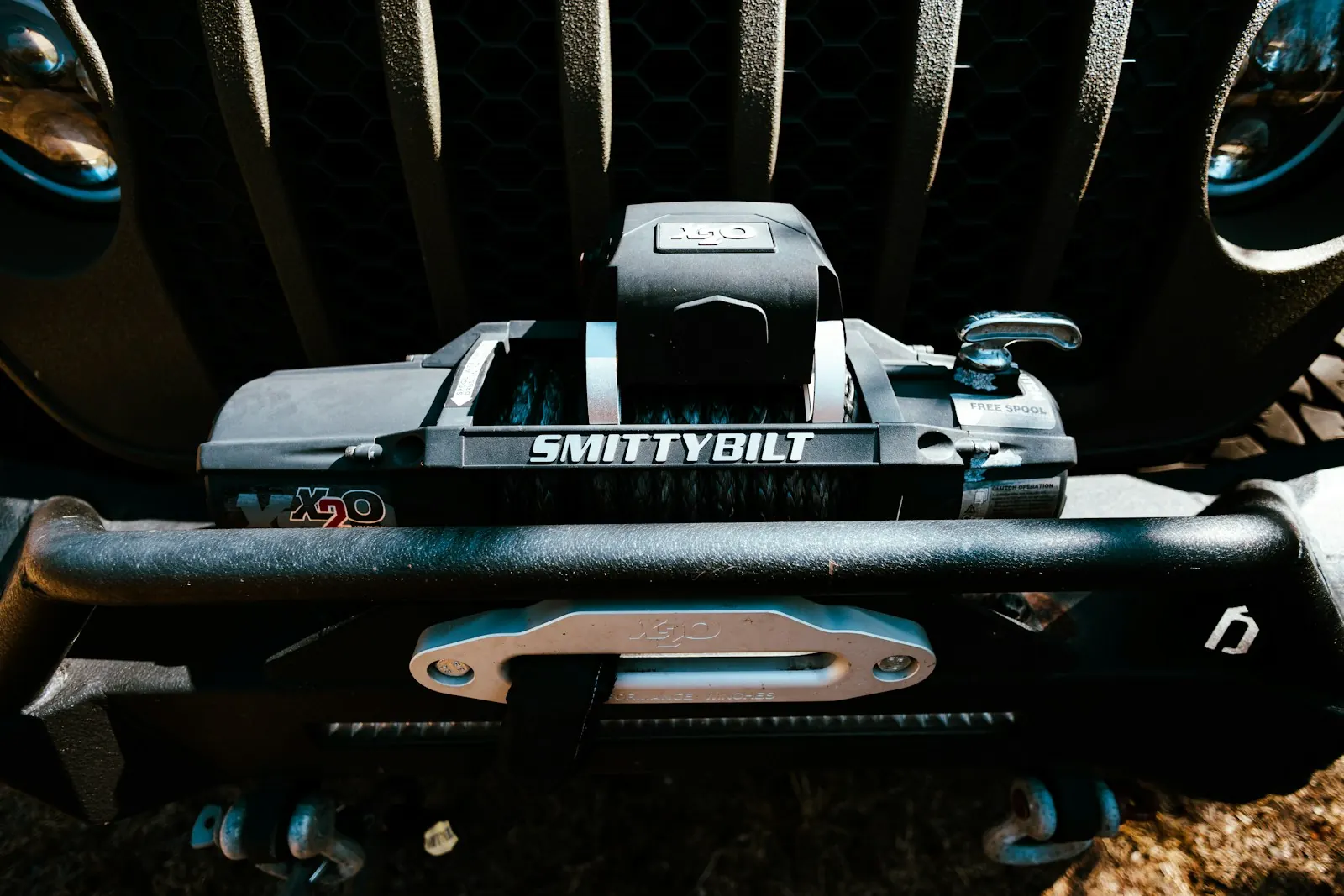
A recovery kit exists for the day you or a trail partner is stuck. It has to be sized to the load, rigged to an actual recovery point, and used with a clear understanding of what can break and where it will fly. A TJ with its stock tow hooks and a $20 strap from a hardware store is a hazard, not a kit. This guide covers what each piece does, what it costs, and the mistakes that put people in the hospital.
Know your recovery points first. The TJ has two frame-mounted tow hooks on the front and, depending on year and trim, a hook or loop at the rear; confirm what yours has before relying on it. They are rated for pulling the Jeep onto a flatbed or out of a ditch, not for the shock loads of a kinetic snatch. Never hook a rope or strap to a trailer hitch ball, an axle tube, a bumper plate that is not frame-mounted, a tie-down loop, or a suspension link. A failed recovery point becomes a projectile. If you run an aftermarket bumper, check that the shackle mounts are welded and gusseted to the frame side, as covered in recovery points for the TJ.
Kinetic rope or static strap. A kinetic rope stretches 20 to 30 percent and stores energy, so the pull comes on as a smooth tug rather than a jerk. The rope's rated minimum breaking strength (MBS) should be at least two to three times the weight of the heavier vehicle in the pull; a TJ weighs around 4,000 lb, and a loaded one more. A 3/4 inch, 20 foot rope rated near 17,600 lb MBS is sensibly sized. A static strap does not stretch and transmits shock to anchors, so use it only for slow, steady pulls such as a winch line extension. Never join two ropes with a knot; use a rated shackle or a purpose-built joiner, and never use a chain for a snatch.
Shackles. Buy forged D-ring or bow shackles with the working load limit (WLL) stamped on them; a 3/4 inch shackle typically carries a 4.75 ton WLL. Avoid cast shackles, and avoid the cheapest imports without stamped ratings. Soft shackles made of synthetic rope are lighter and kinder to paint and are widely used now; check them for abrasion before each trip. Tighten a screw-pin shackle fully, then back it off about a quarter turn so the pin does not bind in the eye after load. Some trail groups argue against the quarter-turn rule; either way, do not leave it finger-loose.
Traction boards. Maxtrax and similar boards solve the most common trail problem, spinning tires on a soft surface, without a second vehicle. Wedge them against the drive tires, point the Jeep forward or back out, and drive slowly onto them. They do not help when the Jeep is high-centered, axle-deep in mud, or hung on a rock; lifting and stacking rocks, or a winch, will. Cheaper boards from other brands exist at roughly half the price and work, but check that they are rated for your weight and that the traction teeth are on both sides.
Hi-Lift jack. A high-lift jack is useful and dangerous. It needs a solid lift point, such as a steel bumper, a rock slider's jacking pad, or a rated jacking tab, and it can kick back on the handle when the load shifts. Keep your head and chest out of the handle's arc, set the jack on a board or plate in soft ground, and lock the mechanism properly. It does not replace jack stands for work under the Jeep. Practice lifting a wheel in your driveway before the trail.
Personal protective gear. Leather gloves, safety glasses, and a recovery damper (a blanket, a heavy jacket, or a purpose-made line damper hung over the rope's midpoint) are cheap insurance. A tire deflator and a compressor are traction tools: airing down from 30 to about 15 PSI often frees a stuck Jeep before anything else is needed. Include a tree-saver strap (3 inch wide, rated 30,000 lb or more) if you will ever winch off a tree.
Steps
- Buy the core kit: kinetic rope (about $100), two forged shackles with stamped WLL (about $30 to $60), gloves, a damper, and a tree saver (about $25). That is roughly $200 to $250 before boards or a jack.
- Add traction boards (roughly $100 to $350 by brand), a tire deflator ($15 to $40), and a compressor ($80 to $200) if you do not have one. Add a Hi-Lift (about $90 to $130) only after you have studied its use and have a lift point on the Jeep.
- Put everything in a bag with a sealed lid so wet rope does not mildew and so loose hardware does not fly in a rollover. Store the bag where you can reach it without unloading cargo, and secure it with a strap or a tie-down. Hi-Lift jacks can be mounted on the exterior, but a loose jack inside the cab is a missile.
- Inspect everything at home: rope for cuts, glazing, or flat spots; shackles for bent pins or stretched eyes; boards for cracks. Retire damaged rope; do not splice it.
- Practice the recovery pull in an empty lot. Attach the rope to a recovery point on each vehicle with a shackle, stand clear of the line of pull, drape the damper over the rope's middle, and have the pulling vehicle start slowly, build speed, and take up the slack gradually; a snatch is a controlled tug, not a full-throttle launch. Agree on hand signals and one person who calls the pull.
- Practice airing down, placing boards, and lifting a wheel with the jack on a firm surface, so each step is familiar before you need it with mud on your gloves.
- Before every trail day, check that the recovery points on both vehicles are intact, and tell your group where your kit is stored.
Why it works
- A kinetic rope and rated shackles solve most mud and sand situations for well under $150 when a second vehicle is present.
- Traction boards are the one item that recovers a lone Jeep from soft ground without a winch.
- Airing down and boards are low-risk compared with a snatch or a high-lift lift, and they should come first in most recoveries.
- A tested kit and a practiced routine turn an hour of trail embarrassment into a 10-minute task.
Trade-offs
- Kinetic ropes need a second vehicle, and misrigging one is how bystanders get hurt; never stand beside the line.
- Hi-Lift jacks can kick back hard and need a solid lift point the stock TJ does not have; plan on a steel bumper or rock sliders before relying on one.
- Boards do nothing for a high-centered Jeep or deep mud and cost more than the rope and shackles combined.
- Stock tow hooks are not shock-rated; for hard snatches, upgrade to frame-mounted shackle points. See TJ winch options for the next step up.
- A full kit weighs 30 to 40 lb and needs a secured home in the cargo area.
- Costs and sources. Starter kit with rope, shackles, damper, tree saver, gloves: $200 to $300. Add boards, deflator, and compressor: $400 to $700 total. Hi-Lift: about $90 to $130. Prices from Bubba Rope, Rhino USA, Maxtrax, Hi-Lift, and ARB listings above are approximate; verify at checkout, and check each product's stated rating before buying.
Tools required
- basic hand tools
- torque wrench
Parts
| Part | Vendor | Est. price |
|---|---|---|
| Bubba Rope 20' Sidewinder Kinetic Rope 3/4" (17,600 lb MBS) | Bubba Rope | ~$99 |
| Rhino USA 3/4" D-Ring Shackles (2-pack, 41,850 lb WLL) | Rhino USA | ~$29 |
| Maxtrax MKII Recovery Boards (pair, LDPE plastic) | Maxtrax | ~$349 |
| Hi-Lift Jack HL-485 (48-inch, 4,660 lb capacity) | Hi-Lift Jack Company | ~$89 |
| ARB Recovery Bag (medium, waterproof storage) | ARB 4x4 Accessories | ~$49 |
Sources
- Overland Journal — Building a Recovery Kit for Trail Use
- Bubba Rope Kinetic Recovery Rope Selection Guide
- Hi-Lift Jack Usage and Safety Instructions
Related
Written and maintained by an AZ wheeler and driveway wrencher. How we source guides. Always cross-reference your factory service manual — modifications affect vehicle safety and warranty. Work at your own risk.