Steel Front Bumper — Budget Through Premium Options
The JL's factory front fascia is plastic and won't survive a significant trail hit — a steel bumper is the foundation of any trail-ready build, and the right choice depends heavily on whether your rig has front parking sensors.
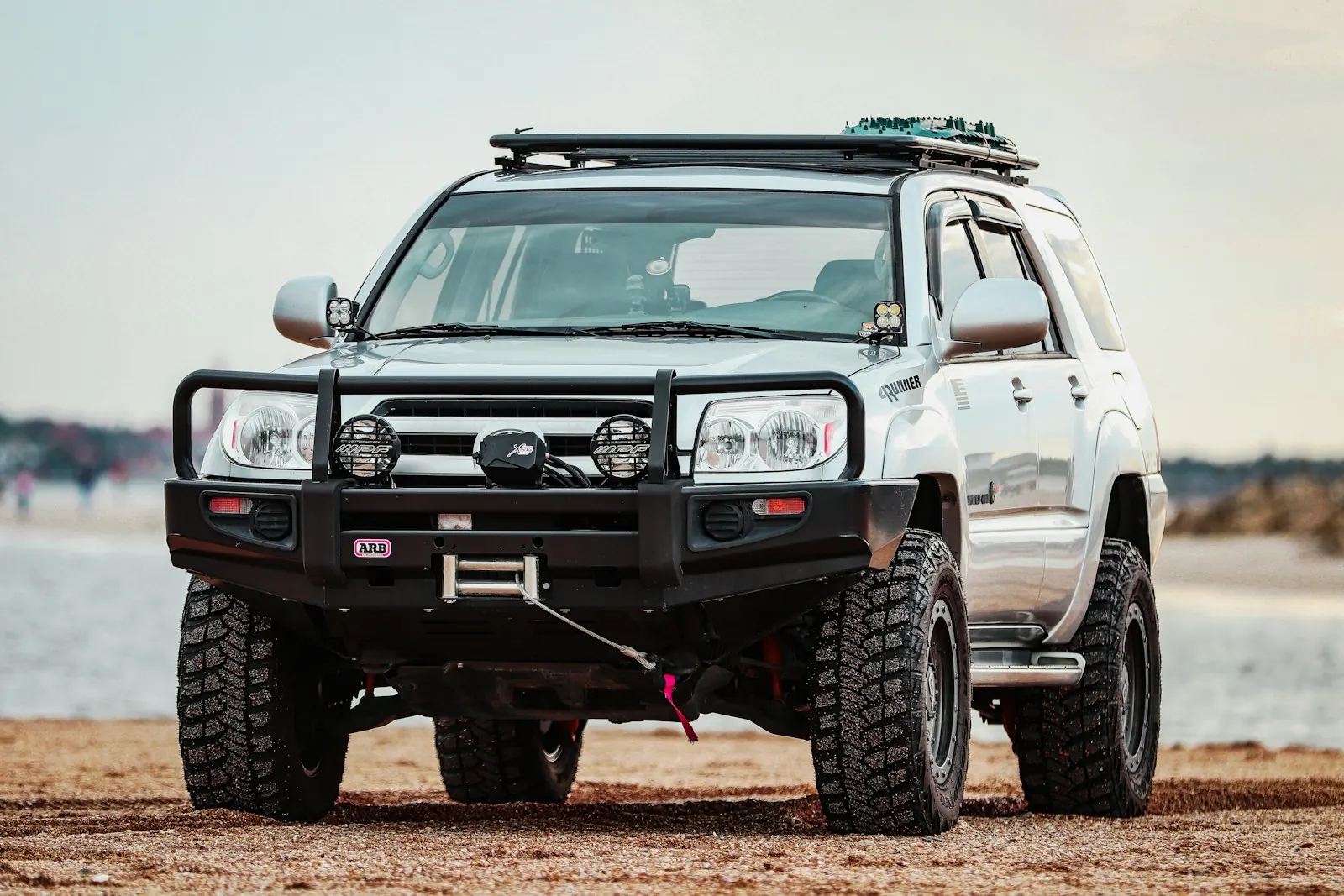
The JL Wrangler introduced front parking sensors on certain trims and packages — specifically, the Sahara with the Safety & Security Group and any JL equipped with the Park Assist package. These sensors sit in the factory plastic fascia and disappear when you swap to a steel bumper. Some aftermarket bumpers are designed to accommodate the factory sensors with integrated sensor ports; others are not. Before ordering any bumper, pull your window sticker or check the Uconnect settings screen to confirm whether your JL has front sensors. If it does, verify explicitly that your chosen bumper is sensor-compatible or accept that the sensors will become non-functional.
The Smittybilt XRC Comp at $499 is the entry-level choice with a winch-ready plate welded in. The construction is heavier gauge than the factory fascia but lighter than the mid-range and premium bumpers — adequate for trail use that doesn't regularly involve direct rock contact. If your budget tops out here, it's a functional platform. The Rugged Ridge Spartan at $549 is the other budget-accessible option; similar gauge to the Smittybilt with a slightly more refined design and sensor port provisions on most variants.
The Warn Ascent at $999 is the value-to-quality sweet spot for most JL builds. Warn's bumper engineering is done in-house and the Ascent is designed specifically around Warn winch mounting dimensions — if you're running a Warn VR EVO or Zeon, the fit is precise. The Ascent also provides better approach angle than most stubby designs while maintaining a lower front profile that keeps headlight sightlines intact.
The Fab Four Stubby at $1,399 is the premium choice for rock-build rigs where approach angle is critical. The stubby design removes the outer wings of the factory bumper envelope entirely, dramatically improving the approach angle — the difference is visible and meaningful on off-camber approaches. The tradeoff is reduced frontal protection on the outer edges and no parking sensor provision. Fab Four's fabrication quality is excellent and the finish holds up well.
Steps
- Disconnect the negative battery terminal before starting — parking sensor wiring and any ambient temperature sensor leads need to be disconnected safely.
- Remove the factory plastic front fascia. Most JL fascias are held by push-pin retainers along the top edge, two bolts in the wheel wells, and clips along the lower valance. A trim panel tool and patience beats a screwdriver and frustration here.
- Disconnect all sensor connectors attached to the factory fascia — parking sensors, fog light harnesses, ambient temperature sensor. Label connectors before unplugging.
- Remove the factory crash bar/impact absorber. This bolts to the frame horns with four bolts.
- If the bumper kit includes a fog light relocation bracket or sensor housing, install it now before the bumper goes on.
- With a helper, lift the new bumper into position and start all bolts finger-tight.
- Confirm bumper is square to the vehicle before torquing. Small asymmetries become obvious at distance.
- Torque mounting hardware to manufacturer spec — typically 60–80 ft-lb on the main frame mount bolts.
- Reconnect fog lights, relocate parking sensor harnesses to bumper sensor ports if present.
- If running a winch: mount winch before final bumper install when possible — much more manageable than fishing the fairlead through the bumper opening after the fact.
- Reconnect battery, test all lights and sensor functions.
Why it works
- Steel construction provides protection that factory plastic cannot — trail-going JLs should have a steel bumper
- Most options in this range include a winch-ready plate — a significant value-add given winch mounting hardware complexity
- Warn Ascent's purpose-built compatibility with Warn winches eliminates fitment guesswork
- Fab Four Stubby approach-angle improvement is meaningful on technical trails
- Rugged Ridge and Smittybilt options deliver core protection at accessible price points
Trade-offs
- Parking sensor compatibility must be verified before purchase — this is the most common ordering mistake on JL bumper installs
- Full-width steel bumpers add 50–90 lbs to the front end, affecting steering feel and approach weight
- Premium options (Fab Four, Warn) represent significant investment — budget total build cost including winch before committing to top-tier bumper
- Stubby designs sacrifice outer approach protection for angle — not ideal for builds that see frequent brush or trail debris
- Factory fog lights typically require relocation hardware (sometimes sold separately) — verify what's included
Tools required
- floor jack (optional)
- socket set
- torque wrench
- wire loom (for sensor relocation)
- trim panel tool
Parts
| Part | Vendor | Est. price |
|---|---|---|
| Smittybilt XRC Comp Series Front Bumper (JL) | Smittybilt | ~$499 |
| Warn Ascent Front Bumper (JL) | Warn | ~$999 |
| Fab Four Stubby Front Bumper (JL) | Fab Four | ~$1399 |
| Rugged Ridge Spartan Front Bumper (JL) | Rugged Ridge | ~$549 |
Sources
- Warn Ascent JL Front Bumper Product Page
- Fab Four Stubby JL Bumper Overview
- Rugged Ridge Spartan Bumper JL
Related
- Rear Bumper with Swing-Out Tire Carrier
- Winch Selection for the JL Wrangler — 10,000 lb Minimum
- Rock Sliders and Rocker Guards
- All Jeep Wrangler JL guides & tools
- Browse the full DIY database
Written and maintained by an AZ wheeler and driveway wrencher. How we source guides. Always cross-reference your factory service manual — modifications affect vehicle safety and warranty. Work at your own risk.