Rear Bumper with Swing-Out Tire Carrier
The stock JL rear bumper is plastic, and the factory swing-arm tire carrier was not built to handle a 37" spare — a steel rear bumper with a proper tire carrier is one of the most functional upgrades on a trail-going JL.
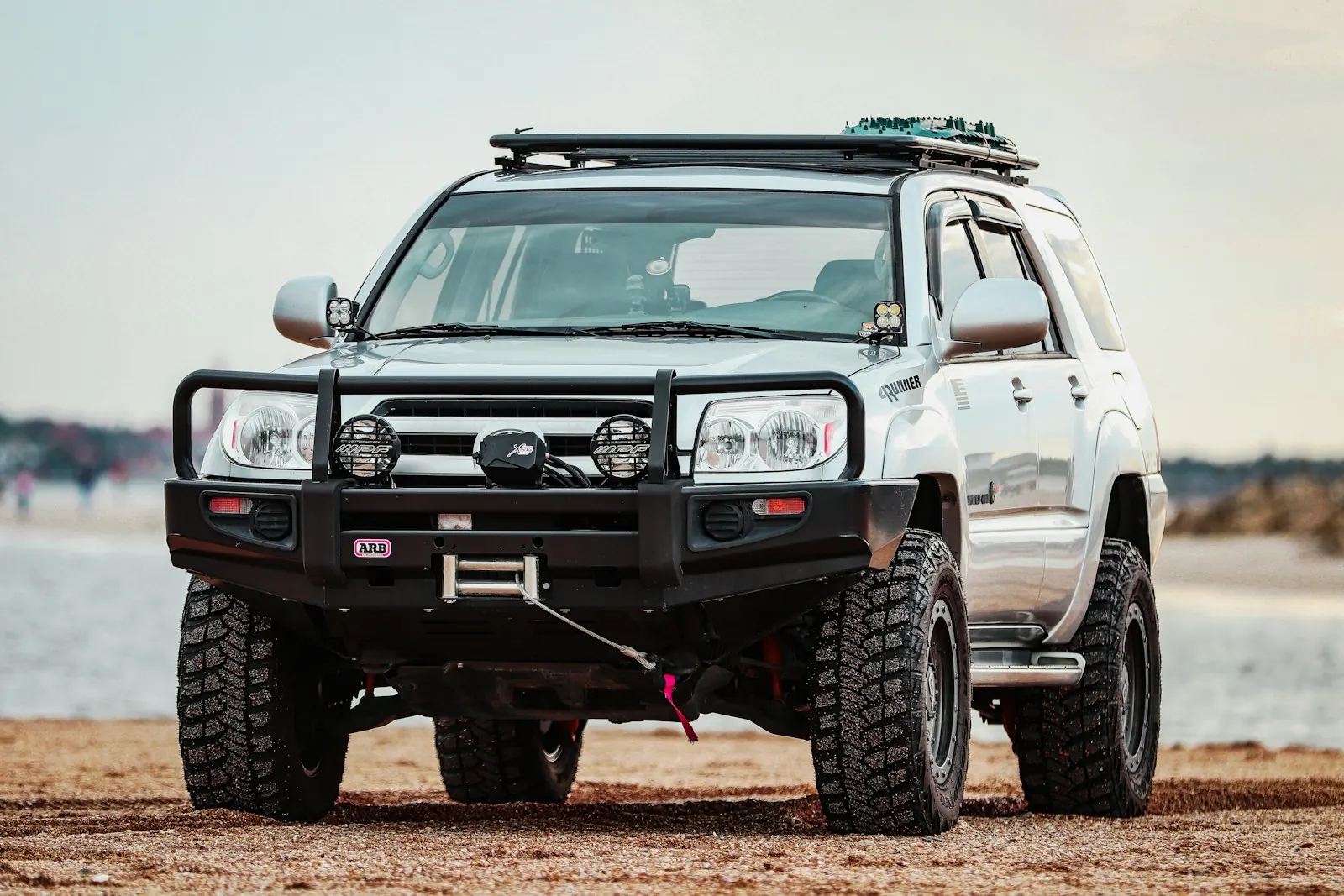
The JL Wrangler ships with a plastic rear fascia and a factory swing-arm carrier that's rated for the 32"–33" factory spare. When you move to 35s or 37s, the added weight of a larger, heavier tire pushes the factory swing arm beyond its design intent — the pivot bearing wears prematurely, the carrier droops, and the rear closure becomes misaligned over time. A steel rear bumper with an integrated, purpose-built carrier solves all of this at once.
The Smittybilt XRC at $899 is the value entry point. The construction is functional, the carrier pivot is substantially more robust than factory, and it handles up to a 35" spare with confidence. For 37s, the Smittybilt's carrier is on the lighter-duty end of capable — it will hold the spare, but the pivot bearing load is higher than with premium options. If you're running 37s long-term, the Poison Spyder, LOD, or Warn units are better investments.
Poison Spyder's rear bumper at $1,199 is the mid-premium choice — heavier construction than the Smittybilt, a more robust pivot mechanism, and finishes that hold up better over time. LOD's Destroyer at $1,399 is notably thick-plate construction with a functional minimalist design that doesn't sacrifice departure angle significantly. The Warn Ascent at $1,599 is the top-tier option: Warn's engineering is thorough, and the carrier pivot mechanism on the Ascent has the smoothest operation and longest expected service life of the four options.
Hitch integration: Most JL rear bumpers include a 2" receiver hitch as part of the design. Verify hitch integration before purchasing if you run a trailer, bike rack, or recovery equipment off the rear. The factory Class II hitch (if equipped) is removed during bumper install.
37" spare weight: A mounted 37x12.5R17 on a steel wheel weighs approximately 85–95 lbs. The tire carrier pivot and the frame attachment points need to handle that load over rough terrain — lighter-duty carriers are not suited to this use case. Go heavier-duty than you think you need.
Steps
- Remove the factory plastic rear fascia (push-pin retainers, clips along the underside, wheel well bolts).
- Disconnect the rear license plate light harness and any backup sensor harnesses.
- If factory-equipped with a trailer hitch receiver, remove it. The new bumper's hitch replaces it.
- Remove the factory swing-arm spare tire carrier — typically four bolts on the factory hinge assembly.
- Remove the factory rear impact absorber/crash bar (bolts to the rear frame rails).
- With a helper, lift the new rear bumper assembly into position. These assemblies are heavy — a 37" spare carrier with bumper can exceed 100 lbs unloaded.
- Start all mounting bolts finger-tight, then confirm the bumper is level and centered before torquing.
- Torque mounting hardware to manufacturer spec — typically 60–80 ft-lb on main frame bolts.
- Reinstall license plate light using the new bracket (usually included). Reconnect harnesses.
- Relocate rear backup sensors if applicable and bumper provides sensor ports.
- Load the spare tire onto the new carrier, confirm pivot operation swings freely and latch engages cleanly.
- Check departure angle clearance — lower the vehicle fully, then drive over a rolled curb or use a ramp to verify the new bumper profile doesn't contact prematurely.
Why it works
- Dramatically more robust tire carrier than factory — purpose-built for 35"–37" spare weight
- Steel construction protects the rear frame area during recovery and trail impacts
- Integrated 2" hitch receiver on most designs adds functional utility
- Departure angle on most JL rear bumpers is improved over factory or equal — the low rear fascia of the JL is typically the departure bottleneck, not the bumper
- Full-replacement install removes all factory plastic from the rear — cleaner visual result
Trade-offs
- Total assembly weight (bumper + spare on carrier) adds significant mass to the rear — up to 100–120 lbs beyond factory. This affects rear spring rate and body pitch
- Installation requires two people — these assemblies are too heavy and unwieldy for solo mounting
- Factory backup sensors require relocation or sacrifice — verify what your chosen bumper does with sensor provision
- Premium options (Warn, LOD, Poison Spyder) represent significant investment — budget realistically against front bumper and other armor priorities
- Smittybilt XRC is functional for 35s but not the ideal choice for long-term 37" spare loads — carrier pivot will see accelerated wear
Tools required
- socket set
- torque wrench
- trim panel tool
- helper for lifting bumper assembly
- drill (for some installs)
Parts
| Part | Vendor | Est. price |
|---|---|---|
| Smittybilt XRC Rear Bumper with Tire Carrier (JL) | Smittybilt | ~$899 |
| Poison Spyder JL Rear Bumper with Tire Carrier | Poison Spyder Customs | ~$1199 |
| LOD Destroyer Series Rear Bumper with Carrier (JL) | LOD Offroad | ~$1399 |
| Warn Ascent Rear Bumper with Tire Carrier (JL) | Warn | ~$1599 |
Sources
- Smittybilt XRC JL Rear Bumper Product Page
- Poison Spyder JL Rear Bumper Overview
- Warn Ascent Rear Bumper JL
Related
- Steel Front Bumper — Budget Through Premium Options
- Rock Sliders and Rocker Guards
- Running 37" Tires on the JL — Rubicon vs Non-Rubicon Fitment
- All Jeep Wrangler JL guides & tools
- Browse the full DIY database
Written and maintained by an AZ wheeler and driveway wrencher. How we source guides. Always cross-reference your factory service manual — modifications affect vehicle safety and warranty. Work at your own risk.