Wheel Selection for the TJ — Steel, Alloy, and Beadlock
Run 15x8 steel or alloy wheels with about 3.75 inches of backspacing for 33s and 35s on a lifted TJ; move to a true beadlock only if you routinely air down below 12 PSI on rock. Budget $300 to $1,000 for a set of five, including the spare.
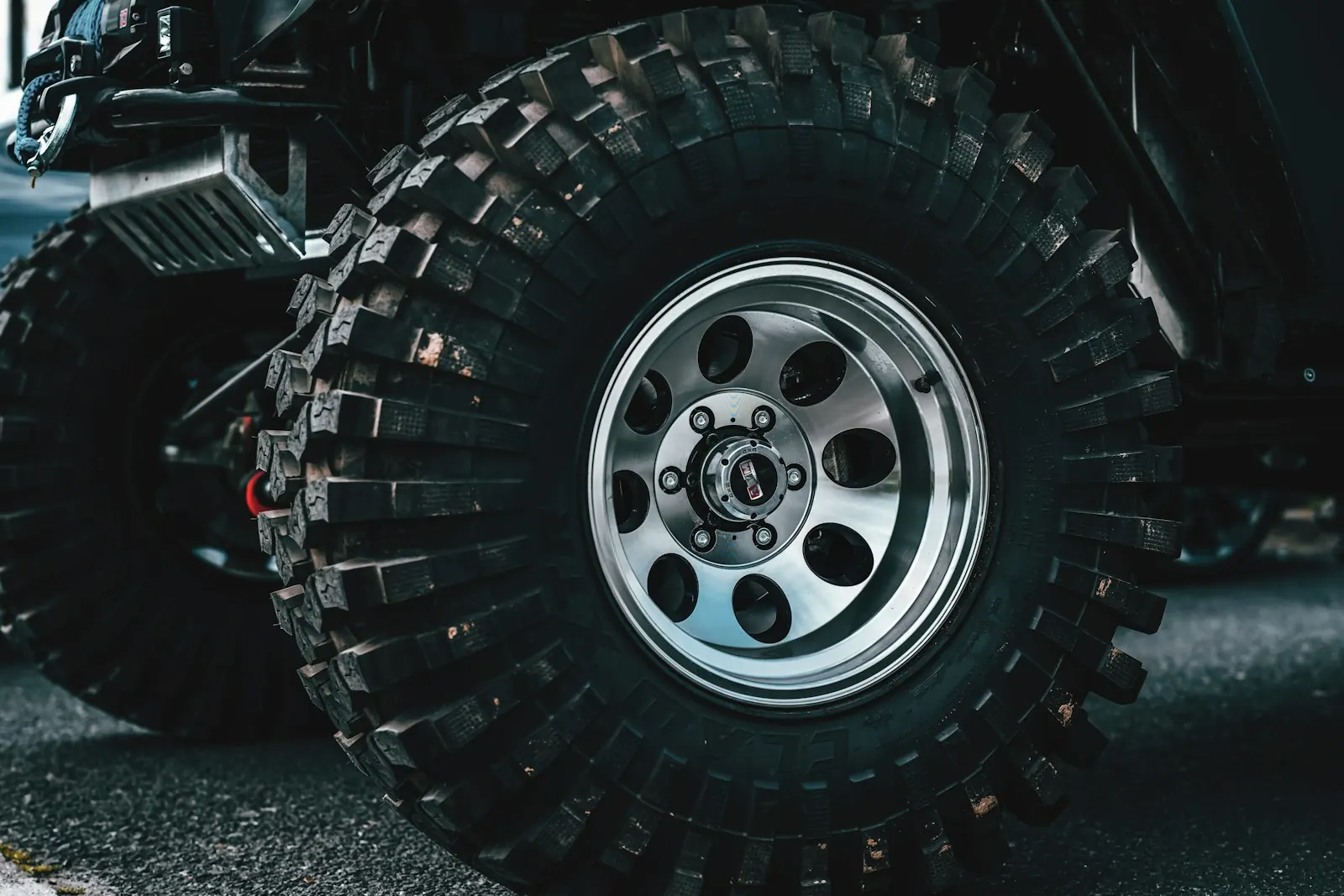
The TJ uses a 5x114.3mm (5x4.5 inch) bolt pattern with a hub bore commonly listed at 71.5mm (about 2.81 inches), and factory studs take 1/2-20 lug nuts. Stock wheels are 15 inch on Sport and SE trims and 16 inch on Sahara and Rubicon. The bolt pattern is one of the most widely produced in the 4x4 world, so the real decision is not what fits but which trade-offs you want: weight, strength, bead retention, cost, and how the wheel sits under the fender.
Backspacing and offset. Backspacing is the distance from the wheel's mounting face to its inner lip. Offset is the same idea measured from the wheel's centerline. For a given width, offset is backspacing minus half the width, so a 15x8 with 3.75 inches of backspacing has an offset of about minus 0.25 inch (roughly minus 6mm), meaning the wheel sits slightly outboard of the hub. That is the working fitment for most lifted TJs: it keeps the tire clear of the control arms and steering linkage at full lock while leaving a little more track width for stability. Drop to 3.5 inches or less and the tire pokes out past stock flares, which draws fender-coverage tickets in some states. Go up toward 4.5 inches and the inside of the tire gets close to the control arms, the track bar, and the sway-bar links, especially once a lift adds droop. If you are running 35s, check the tire-fitment notes in 35-inch tire fitment on the TJ first, because a 35 needs lift, trimming, and gearing that the wheel choice cannot fix.
Steel versus alloy. A steel wheel such as the Pro Comp Series 51 is heavy, cheap, and can be bent back after a rock strike, which is why it is still the trail default. A cast alloy wheel is lighter, usually looks better, and costs more; it also cracks rather than bends if it takes a hard hit, and a cracked alloy on the trail is a spare-tire day. On a TJ, unsprung weight matters most for ride quality and steering feel, and a 35-inch tire already adds far more weight than any wheel choice saves. Buy steel if the Jeep lives on rocks and you want the cheapest reliable set; buy alloy if it is a daily driver that sees trails on weekends.
Beadlocks, honestly. A true beadlock clamps the tire bead to the wheel with a ring and bolts, so the tire stays seated at pressures that would otherwise let it break the bead, in the neighborhood of 8 to 12 PSI. That is a rock-crawling tool. On dirt roads, dunes, and most trails, a standard wheel at 15 PSI or more is fine, and a beadlock adds weight, cost, and maintenance. The bolt ring needs a periodic torque check (the maker's interval and torque pattern govern; do not rely on a remembered number), and street use of a true beadlock can leak slowly at the ring. Many wheels sold as beadlock-style are only a decorative ring bolted to a standard wheel; they do not hold the bead. Read the product description before paying for the look. Related reading: TJ beadlock wheels.
The spare and the carrier. A heavier wheel and tire changes the tailgate load. A 33 on a steel wheel is manageable on the stock carrier; a 35 on steel can sag the tailgate and stress its hinges, so budget for a reinforced carrier or a bumper-mounted carrier if you move up.
Steps
- Confirm the specs before you order: 5x4.5 inch pattern, hub bore of 71.5mm or larger (a larger bore is fine with hub-centric rings; a smaller one will not fit), and backspacing in the 3.75 to 4 inch range for a lifted TJ. Ask the seller to confirm fitment for a 1997 to 2006 Wrangler TJ in writing.
- Have the tires mounted and balanced at a shop. Ask for the wheel's rated load to be at or above the tire's, and have them check that the tire's bead seats cleanly all the way around.
- Loosen the lug nuts on the old wheel about a quarter turn while the Jeep is on the ground. Raise the Jeep and support it on jack stands under the axle or frame; never rely on the jack alone.
- Remove the wheel and clean the hub face of rust and debris with a wire brush. Rust or paint on the mating surface causes lug nuts to loosen as it compacts.
- Mount the new wheel and thread the lug nuts by hand. The TJ takes 1/2-20 nuts; confirm your aftermarket wheel's seat type (conical is typical) matches the nut, because a wrong seat can loosen under load.
- Snug in a star pattern, lower the Jeep, and torque to the factory figure in the service manual. Several references and earlier TrailManual guides cite 95 ft-lb; verify against your manual before relying on it.
- Drive 25 to 50 miles and re-torque. Aluminum and painted wheels seat in during the first drive.
- At full lock in both directions, check the tire against the sway-bar links, brake hoses, control arms, and the inside of the fender. Do the same at full compression with a helper bouncing the corner, or by stuffing the bump stop if your suspension allows it.
Why it works
- The 5x4.5 pattern gives the widest selection and price range of any common 4x4, from $75 steel to premium forged beadlocks.
- Steel wheels survive rock strikes that crack cast alloy and can be bent back on the trail.
- A 15x8 at about 3.75 inches of backspacing clears the TJ's steering and control arms with a modest lift and gives 33s a stable stance.
- True beadlocks let you air down to the pressures that make rock crawling controllable, with far less risk of losing a bead.
Trade-offs
- Steel wheels are heavier than comparable alloys, and the extra rotating mass is felt in steering and acceleration.
- Backspacing below 3.5 inches pushes the tire past stock flares, and wheels near 4.5 inches can contact control arms after a lift.
- True beadlocks need periodic bolt maintenance and can seep air; beadlock-look wheels cost the same as beadlocks and do not do the same job.
- Wheel spacers or adapters as a fix for bad fitment add stress to the studs and another failure point; buy the correct backspacing instead.
- Moving to heavier wheels and tires can load the tailgate hinges and stock tire carrier beyond their design.
- Costs and sources. Pro Comp Series 51 steel 15x8: about $75 to $100 each, or $375 to $500 for five. Method 105 beadlock 15x8: about $145 to $250 each depending on finish and vendor, which puts a set of five at $700 to $1,250 before tires. Mid-price alloys (Raceline Monster, KMC Rockstar): $110 to $190 each. Mounting and balancing: $25 to $35 per tire for LT-rated off-road tires. Prices drift; confirm at checkout. Related: Budget lift for the TJ.
Tools required
- torque wrench
- lug wrench
- floor jack
- jack stands
Parts
| Part | Vendor | Est. price |
|---|---|---|
| Pro Comp Series 51 Steel Wheel 15x8" 3.75" BS (5x4.5" bolt pattern) | Pro Comp | ~$75 |
| Method Race Wheels 105 Beadlock 15x8" 3.5" BS (5x4.5") | Method Race Wheels | ~$145 |
| Raceline Monster 8 15x8" 3.75" BS (5x4.5") | Raceline Wheels | ~$110 |
| KMC XD Rockstar 2 15x8" 3.625" BS (5x4.5") | KMC Wheels | ~$135 |
Sources
- JeepForum — TJ Wheel Backspacing and Fitment Guide
- Pro Comp 51 Series Steel Wheel Specs
- Method Race Wheels 105 Beadlock Overview
Related
- Running 35" Tires on the TJ — Lift and Fitment Requirements
- Budget Lift Kit — Coil Spacers and Entry Springs (≤$600)
- All Jeep Wrangler TJ guides & tools
- Browse the full DIY database
Written and maintained by an AZ wheeler and driveway wrencher. How we source guides. Always cross-reference your factory service manual — modifications affect vehicle safety and warranty. Work at your own risk.