Budget Lift Kit — Coil Spacers and Entry Springs (≤$600)
A budget lift (coil spacers or an entry spring kit) is a sound way to fit 31-inch tires and raise a TJ about 2 inches, but the sticker price is not the real price. Plan $450 to $1,000 once you add matched shocks, a track bar, and an alignment, because the cheapest kits skip all three.
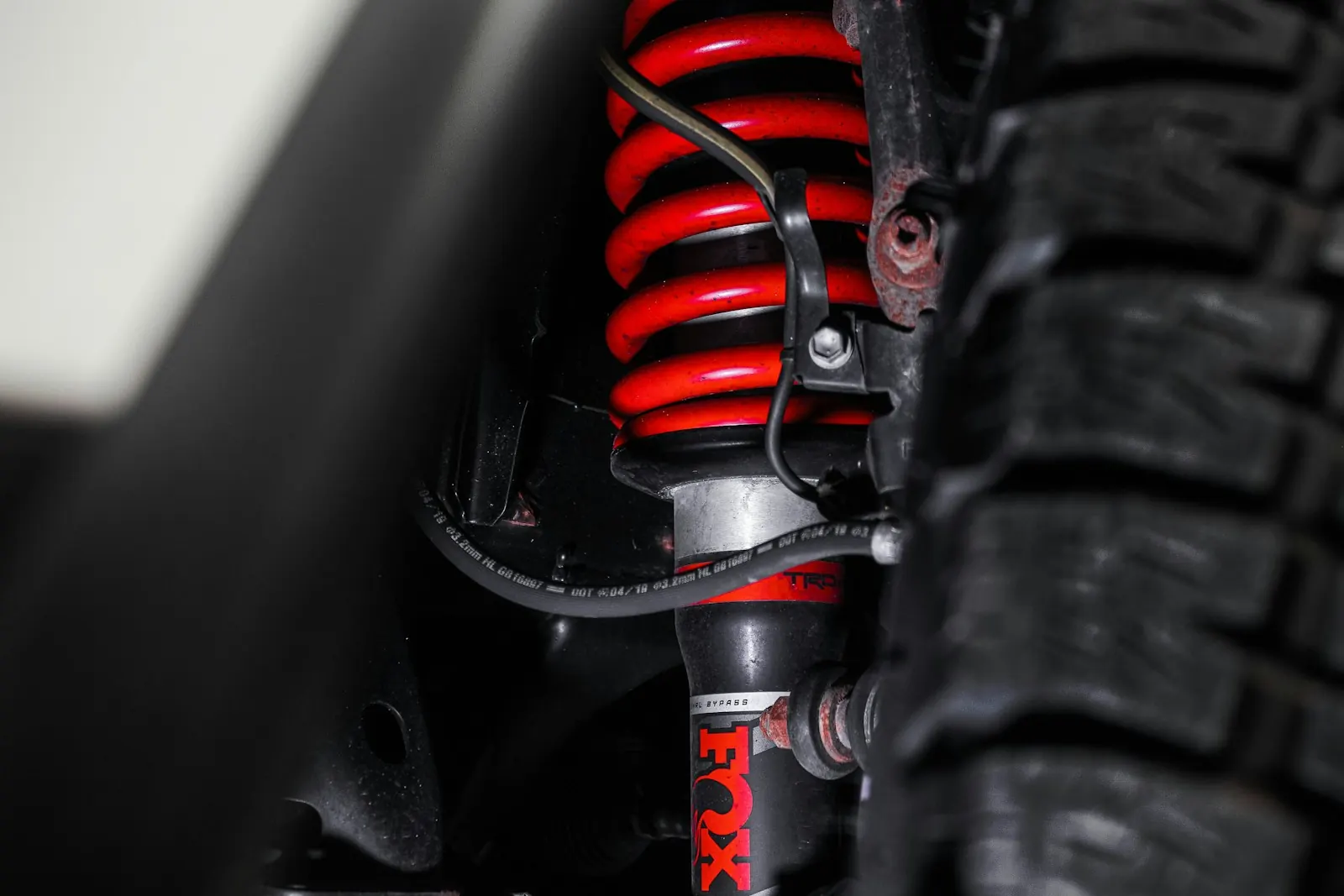
The TJ's coil-spring front and rear suspension makes entry lifts less invasive than on leaf-sprung Jeeps. Because the springs are held in their seats by axle droop and not by a compressor, a 2-inch spacer goes in during a Saturday afternoon with a floor jack and basic hand tools. Expect the Jeep to ride about 2 inches taller, clear 31x10.50R15 tires, and look more level once the spacers go on. What you do not get is more suspension travel, a corrected steering geometry, or better shock performance.
Spacers versus replacement springs. A polyurethane coil spacer such as the Daystar 2-inch set in the parts list sits between the spring and its perch. It keeps the factory spring rate and the factory ride, which is fine if your springs are healthy. It also leaves the stock shocks in place, and a stock shock at 2 inches higher ride height runs closer to its fully extended length, which limits how far the axle can droop before the shock stops it. A replacement coil kit such as the Rough Country 2-inch kit changes the spring itself, usually with a softer rate, and lets you tune front and rear height separately. Entry springs are the more complete answer; spacers are the cheapest one. At the top of this price range, the Skyjacker 3.5-inch kit adds more lift, and its included track-bar drop bracket matters because geometry errors scale with lift. Treat the included hydraulic shocks as entry-grade and plan to replace them before serious trail use (see the shock upgrade guide).
Geometry at 2 inches. Raising the body 2 inches moves the track bar and drag link away from their designed angles. The front axle shifts slightly sideways under suspension travel, and the steering linkage creates mild bump steer. Both effects are small at 2 inches and visible at 3. Symptoms are a steering wheel that is off-center after the install, vague feel at highway speed, and wandering over expansion joints. The corrective parts are an adjustable front track bar ($150 to $360, see the track bar guide) and, on higher kits, a drop bracket. If the Jeep has any history of death wobble, solve that first; a lift will not improve it.
Other things a lift changes. Check these before you decide the Jeep is done.
- Sway bar end links: The stock links become too short at full droop. Disconnecting the sway bar for trail use is common; for a daily driver, longer end links fix it.
- Brake hoses and the axle vent hose: The factory hoses have enough slack for about 2 inches, but check at full droop with the Jeep on stands so nothing tightens before the axle stops.
- Bump stops: A taller body leaves the bump stops farther from the axle, which allows more flex before contact. If the tires rub, extend them rather than trimming first.
- Driveshaft angle: Two inches is within the tolerance of the factory shafts at the front. At about 2.5 inches and above, the rear shaft angle at the NP231 slip yoke begins to cause vibration, and the transfer case becomes the next item; the NP231 guide explains the options.
- Alignment: Camber, caster, and toe shift. Budget $100 to $150 for a front alignment, and have the shop check the thrust angle.
Tire expectations. A 2-inch lift runs 31x10.50R15 tires comfortably. A 32-inch tire will often rub at full flex and may need trimming or extended bump stops. A 33-inch tire needs more lift than this guide covers; see the mid-lift guide. Do not pick the lift to justify the tire; pick the tire for your terrain and buy the lift that fits.
The real cost. Spacers ($129) plus quality shocks ($200 to $450 for the set) plus an adjustable track bar ($150 to $360) plus alignment ($100 to $150) land between $580 and $1,100. An entry spring kit ($189) plus the same items sits in the same range. If your budget cannot cover that, install the spacers and keep the stock shocks only while the shocks are healthy, drive moderately, and add the track bar next. That order protects steering feel first.
Costs and sources. Daystar spacers: about $129. Rough Country 2-inch kit: about $189. Skyjacker 3.5-inch kit with shocks: about $599. Matched shocks: $200 to $450. Adjustable track bar: $150 to $360. Alignment: $100 to $150. All-in: $450 to $1,100 depending on how much of the missing hardware you add. Compare against the lift options guide before you commit, because moving from a budget kit to a 3 to 4 inch kit later means paying for the spacers twice.
Steps
- Loosen the front lug nuts, raise the Jeep, and set it on jack stands under the frame rails, never under the axle you are working on. Remove the wheels.
- Support the front axle with a floor jack. Disconnect the sway bar end links, the lower shock bolts, and the track bar at the axle bracket. Photograph or note the original track bar bolt orientation.
- Lower the axle slowly with the jack until the coil springs are loose in their seats. Watch the brake hoses and vent hose while you do this. Do not use a spring compressor; the springs are free once the axle drops.
- Remove the springs. Fit the spacer onto the spring perch, or install the replacement spring, making sure the spring seats in the isolator and the lower perch.
- Raise the axle until the springs are held, then reconnect the shocks, the sway bar end links, and the track bar. Leave suspension bolts finger-tight.
- Repeat at the rear: support the axle, disconnect the shocks and sway bar links, lower the axle, fit the spacer or spring, and reassemble.
- Reinstall the wheels and torque the lug nuts to 95 ft-lbs in a star pattern, then lower the Jeep onto the ground.
- With the Jeep at ride height and bounced to settle, torque the control arm and track bar bolts to the figures in the service manual or the kit instructions. Tighten rubber bushings only at ride height, or they will be preloaded and wear early.
- Re-check front and rear for clearance by turning the wheel lock to lock and having a helper compress each corner.
- Drive 100 miles, re-torque every suspension fastener, then get the alignment.
Why it works
- The lowest price of entry into the lift world, and reversible if you change your mind.
- Fits 31-inch tires without modifying fenders.
- Installs with ordinary hand tools and a floor jack, with no spring compressor.
- The factory ride is nearly retained with spacers, which suits a daily driver.
Trade-offs
- No travel gain: spacers leave the stock shocks and limit droop.
- Geometry is not corrected on cheap kits, so you pay in bump steer and a track bar you must add later.
- At 2.5 inches and above, driveline vibration at the NP231 slip yoke becomes your next expense.
- Entry-grade hydraulic shocks packaged with some kits are not trail-ready.
Tools required
- floor jack
- jack stands
- socket set
- torque wrench
Parts
| Part | Vendor | Est. price |
|---|---|---|
| Daystar 2" Coil Spacers KJ09123BK (front and rear, polyurethane) | Daystar Products | ~$129 |
| Rough Country 2" Budget Lift Kit TJ 674 | Rough Country | ~$189 |
| Skyjacker 3.5" Suspension Lift Kit with Hydro Shocks TJ35K | Skyjacker | ~$599 |
Sources
Related
- Mid-Tier Lift Kit — 3"–4" Spring Lift ($600–$1,500)
- Shock Absorber Upgrade — OME, Bilstein, and Fox Options
- All Jeep Wrangler TJ guides & tools
- Browse the full DIY database
Written and maintained by an AZ wheeler and driveway wrencher. How we source guides. Always cross-reference your factory service manual — modifications affect vehicle safety and warranty. Work at your own risk.